
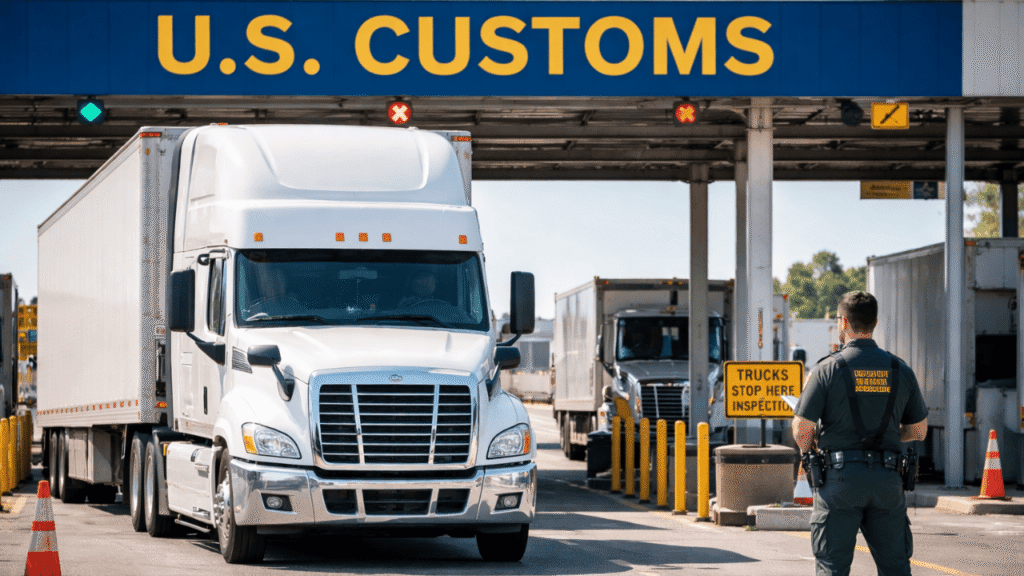
CTPAT certification can really help your business if it moves goods across borders. It’s not just a label for a trusted trader. It shows that your business cares about the safety of its cargo and goes above and beyond to protect shipments going to other countries. According to U.S. Customs and Border Protection, CTPAT is a voluntary public-private partnership program that helps make international supply chains safer by encouraging better security practices. In return, approved partners may receive perks such as fewer cargo checks and faster processing at ports of entry.
CTPAT certification can help importers, exporters, carriers, and logistics providers run their businesses more safely, move goods across borders more easily, and build trust with customers. It can also help businesses meet important CBP requirements while improving their own processes.
Table of Contents
What is CTPAT certification?
The full name of CTPAT is Customs-Trade Partnership Against Terrorism. U.S. Customs and Border Protection (CBP) runs the program, but it’s not required. Companies that obtain CTPAT certification have demonstrated to CBP that they have strong security measures in place throughout their supply chain, from the point of origin to the U.S. border.
The program started after September 11, 2001, because people were worried about the safety of international trade. CBP needed a way to distinguish between low-risk, trusted importers and high-risk, unknown importers. CTPAT certification became that tool.
Importers, exporters, customs brokers, freight forwarders, carriers, and third-party logistics providers are all CTPAT-certified members today. If your business has anything to do with international trade, there is probably a membership category that fits you.
How Does the Certification Process Work?
Getting CTPAT certified is not just about checking a box. It means really committing to the supply chain security standards that CBP checks and approves over time. This is how the process usually goes:
- Step 1: Apply online — You send in your application through the CBP CTPAT website. Depending on the type of business you have, you’ll need to agree to a set of minimum security standards.
- Step 2: Submit a security profile — You write down how you currently handle security in areas such as physical security, employee screening, IT systems, and cargo handling.
- Step 3: CBP validation — A CBP supply chain expert looks over your profile and might visit your site to make sure that what you say you do is what you actually do.
- Step 4: Ongoing compliance — Certification doesn’t last forever. CBP needs to check your security profile periodically, and you need to keep it up to date as your business changes.
The CBP requirements are based on minimum security standards that include how you handle business partner relationships, access controls, conveyance security, and personnel vetting. These standards vary slightly by business type.
Why CTPAT Certification Matters for Trade and Logistics
This is where things get real. CTPAT certification is more than just a badge for your website; it delivers real, measurable benefits to businesses that do cross-border trucking, imports, and international logistics.
- Fewer checks and faster clearance — CBP believes that certified companies are less risky, meaning their shipments are less likely to be stopped at the border for a thorough inspection. In an industry where hours of delay can cost thousands of dollars, this benefit alone is often enough to make the effort to get certified worth it.
- Front-of-line processing — CBP’s FAST (Free and Secure Trade) lanes at land border crossings give CTPAT members priority processing. This is a major plus for trucking companies that move large volumes of goods between the U.S., Canada, and Mexico.
- Stronger business relationships — Better relationships between businesses. Many big retailers and importers actively want, or even need, their logistics partners to be CTPAT-certified. Customs compliance is no longer just a box to check; it is now a factor in sourcing. Getting the certification can help you gain access to places that would otherwise be closed to you.
- Lower risk exposure — Cargo theft, smuggling, and trade fraud are less likely to occur in companies with strong supply chain security practices. These threats are not just ideas. Research groups studying freight crime say cargo theft costs U.S. businesses hundreds of millions of dollars each year. CTPAT’s security framework helps you create the habits and systems that lower this risk.
- Mutual recognition with other countries — The U.S. has agreements with other trade security programs around the world, such as Canada’s PIP program and the EU’s AEO program, to recognize each other’s work. If you do business with people in different countries and markets, CTPAT certification can help you comply with those countries’ rules as well.
Who Should Pursue CTPAT Certification?
CTPAT certification isn’t necessary for every business, but you should really think about it if you:
- Bring things into the United States regularly
- Do cross-border trucking between the U.S., Canada, and Mexico
- Serve importers as a customs broker, freight forwarder, or third-party logistics (3PL) company.
- Compete for contracts with businesses that need trade security credentials.
- Want to cut down on the time and money it takes to inspect borders.
- Small businesses can also qualify. CBP has made the program available to businesses of all sizes, but the paperwork and ongoing maintenance require significant effort.
Ready to Get CTPAT Certified?
CTPAT certification is one of those programs that seem unnecessary on paper but are becoming increasingly essential in practice. As international trade becomes more complex and the pressure to comply with customs rules increases, certified businesses have a clear advantage in terms of speed, cost, and the trust they earn from both customers and government agencies.
If your business depends on smooth, efficient cross-border trade, visit us at welocity.ca, call +1 (905) 901-1601, or email info@welocity.ca to guide you through every step of the CTPAT certification process, from your initial security profile to ongoing compliance.