
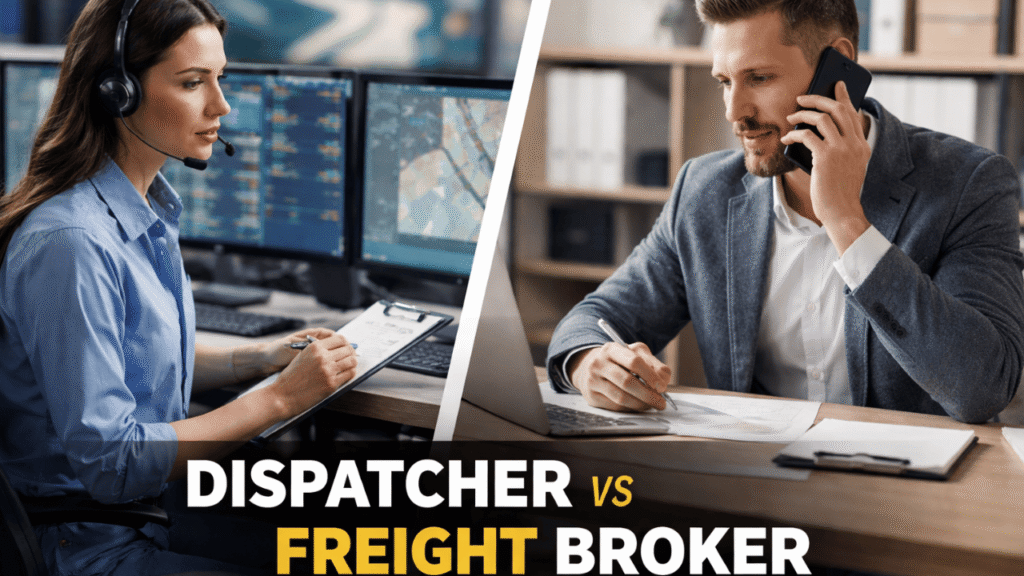
If you want to work in trucking, you’ve probably asked yourself the same question that everyone else does: “dispatcher vs freight broker,” which one is the best path?
Both jobs are very important to the movement of goods across the country. You don’t have to drive a truck for either. But the jobs are very different in terms of how much money they can make, how much it costs to start, and what they do every day. This guide explains everything so you can choose the best one for you.
Table of Contents
What Does a Freight Broker Do?
A freight broker is a licensed middleman who connects shippers (businesses that need to move goods) with carriers (trucking companies that do the moving). Brokers discuss prices, arrange shipments, and ensure freight moves smoothly from point A to point B.
Freight brokers send bills directly to shippers for their services and pay carriers to move the load. This is not what dispatchers do. The carrier makes money by charging more than the shipper pays.
To be a freight broker in the U.S., you need to get a $75,000 surety bond and apply for Motor Carrier Authority through the FMCSA. That’s the hardest part about getting in, but it also gives you more freedom with your money and business.
What Does a Dispatcher Do?
Independent dispatchers help trucking companies find loads for drivers, plan shipments, and streamline operations for owner-operators and small motor carriers. They are in the middle of freight brokers and truck drivers.
Dispatchers connect customers and truck drivers by coordinating their movements to ensure goods are delivered on time. They aren’t negotiating on behalf of shippers; they’re fighting to get the carrier the best deal possible.
The good news for people who are just starting? It costs less to start a freight dispatching business than a brokerage business because dispatchers don’t need a license or a surety bond to work.
Dispatcher vs Freight Broker Comparison: The Main Differences
Here’s a simple comparison of a dispatcher and a freight broker based on the most important factors:
- Who They Work For — The main difference between a freight broker and a dispatcher is the company they work for. Shippers pay brokers to work for them, while motor carriers pay truck dispatchers directly.
- Requirements for Licensing — To work as a broker, you need an FMCSA license and a surety bond. There are no rules for dispatchers, but freight brokers must be licensed and have insurance. That said, being an unauthorized broker as a dispatcher can have serious consequences, including a $10,000 fine each time it occurs.
- Goals for Negotiation — Dispatchers aim to secure the best prices for the carrier, while freight brokers seek the lowest prices for the shipper and charge the highest prices to the carrier.
Who Makes More: a Freight Broker or a Dispatcher?
For most people, this is usually the most important thing.
The top income for freight brokers is much higher. The average salary for a U.S. freight broker in 2025 is expected to be $70,000. Entry-level jobs pay between $45,000 and $50,000. Most of the time, commission rates range from 15% to 18% of the gross margin per load. Brokers who run their own businesses and have been in the business for a while can make well into the six figures.
The salary of a dispatcher is more stable but lower overall. The average salary for a dispatcher is between $35,000 and $65,000 a year. People who work for themselves and with many owner-operators may get higher commissions. Most of the time, independent dispatchers receive a 5–10% commission on the load pay rate.
The main point? Freight brokers can make more money, but dispatchers can make a steady, reliable income with fewer startup costs.
Career Outlook: Which Job Growth Is Better?
The question of “dispatcher vs freight broker” also comes down to long-term prospects.
The U.S. trucking industry is still growing. By 2034, total truck tonnage is expected to rise from 11.3 billion tons to 14.2 billion tons. In the next ten years, there will be about 30,100 job openings for freight brokers.
The picture is more mixed for dispatchers. The job outlook for freight dispatchers isn’t as good; over the next ten years, the number of jobs in this field is expected to drop by 8%. That said, skilled dispatchers who build strong networks of drivers are always in demand, no matter what else is going on.
Which Career is Better for You?
There isn’t a single right answer to the question of whether to hire a dispatcher or a freight broker. It all depends on what you want to accomplish.
- Pick dispatching if: You want to get into logistics jobs faster and for less money at first. You like solving problems that come up in your work every day better than selling. – You want to be a broker in the future and need to get some experience in the field first.
- Pick freight brokering if: You want to make more money and are willing to work hard to get clients. You’re okay with making money based on commissions and some early doubt. You want to start your own trucking business in the jobs space
Some people start as dispatchers, make many industry contacts, and then move on to brokering. That’s one of the smartest things you can do, because by the time you apply for your broker license, you’ll already know how the business works from the inside.
Ready to Launch Your Logistics Career?
The debate about dispatcher vs freight broker isn’t about which job is better in general; it’s about which one is best for you right now. Dispatching gets you going faster and with less risk. Over time, freight brokering will help you make more money and be more independent.
Both paths lead to one of the most important parts of the economy. Choose the one that fits your current situation, and remember that you can always improve from there.
Visit welocity.ca, call +1 905-901-1601, or email info@welocity.ca to find dispatcher and freight broker jobs that match your skills and goals.