
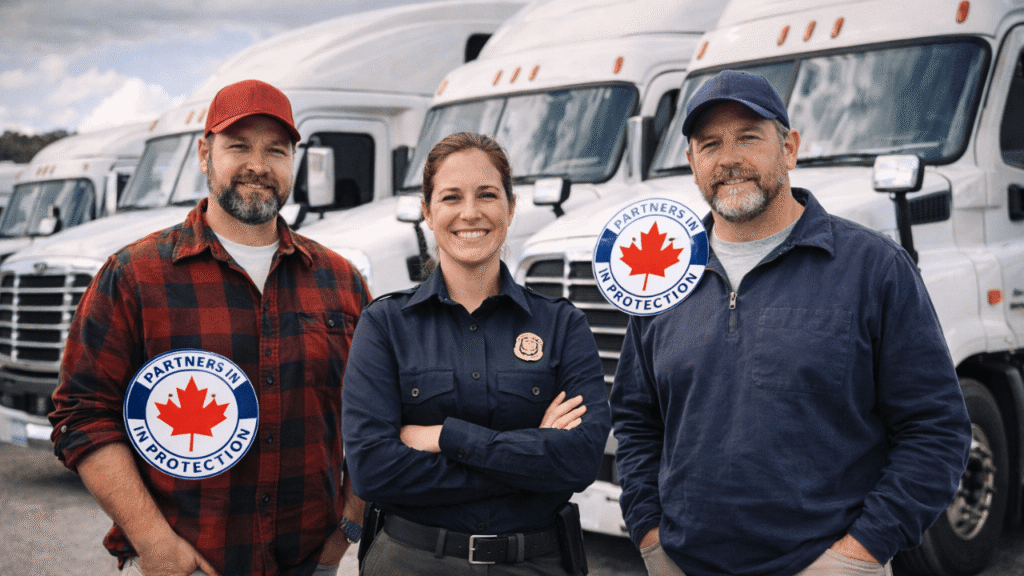
If you haul freight between Canada and the U.S., you’ve probably heard someone say, “Are you PIP?” at least once. And if you’re new to cross-border work, it’s fair to ask what PIP stands for and why people treat it like a big deal.
Here’s the simple answer: PIP stands for “Partners in Protection,” and it’s a voluntary security program tied to how Canada assesses supply chain risk.
Table of Contents
What PIP Stands For and Why Carriers Care
So, what PIP stands for in day-to-day trucking terms is this: a recognized security relationship between your business and the border agency. The program is run by the Canada Border Services Agency, and it’s designed to strengthen cargo and facility security while supporting more efficient processing for low-risk members.
Carriers care because border delays are expensive. One inspection can blow up an appointment, trigger detention, and mess with your hours. When your operation follows a documented security standard, you’re not “guaranteed” to skip inspections, but you’re building a lower-risk profile.
And yes, if you’re still wondering what PIP stands for, it’s not a permit you buy. There’s no membership fee, but you do have to meet requirements and maintain them.
PIP Program Meaning in Canadian Trucking
In Canadian trucking, the PIP program means meeting security standards that you can show on paper and in real life. This is what PIP certification means for carriers:
- You apply as a type of business that is eligible (highway carriers are one of them).
- You promise to meet the minimum security needs of your whole business.
- You make sure that partners and processes follow the program’s rules.
Those minimum security requirements are based on real life: how you keep people out of yards and buildings, how you protect trailers and freight, how you check and train employees, and how you handle exceptions when something doesn’t seem right.
One important update fleets should note: CBSA has clarified and updated parts of its guidance over time, including eligibility language and administrative requirements tied to how businesses register and manage accounts in CBSA systems.
What PIP Stands For in the Bigger Cross-Border Picture
A lot of fleets mix up terms, so let’s clean it up:
- What PIP stands for a Canadian security membership concept.
- It’s part of a broader “trusted programs” approach that border agencies use to focus attention on higher-risk moves.
- It can support smoother operations when paired with consistent procedures and clean trip documentation.
This is why you’ll hear PIP discussed alongside “trusted” programs and expedited lanes. Even when programs differ, the mindset is the same: prove you run a tight operation, and you reduce friction.
What Fleets Typically Put in Place to Meet PIP Expectations
If you want what PIP stands for to translate into something practical, you need routines, drivers, and dispatch that can follow without guesswork. Most fleets tighten up these areas:
- Trailer and seal control: consistent seal use, seal logs, and quick reporting when something doesn’t match.
- Facility access control: yard gates, visitor sign-in, and clear “who can go where” rules.
- Partner oversight: making sure the companies you work with don’t weaken your process.
- Incident playbook: what to do if cargo looks tampered with, paperwork doesn’t match, or a driver feels something is off.
This is where the program acts like a pressure test on your operation. If your procedures are fuzzy, PIP forces you to clarify them.
(And to fit your required terms once: many carriers describe PIP as a CBSA security program that supports supply chain security and helps businesses present as a trusted trader for better cross-border compliance.)
Related Article: Benefits of PIP Certification for Truckers: Why It’s Worth It
Why PIP Matters to Drivers and Dispatch
Here’s the honest value: when your company treats security like part of the job (not an afterthought), you get fewer “border surprises.” Dispatch has better predictability. Drivers spend less time stuck waiting for a decision. Customers get fewer service failures.
That’s the real reason people keep asking what PIP stands for, because they’re chasing consistency.
Making PIP Make Sense for Your Operation
If you’re debating whether this fits your fleet, don’t overthink it. Start by tightening your basics: seals, access control, partner expectations, and clean documentation. Whether you apply now or later, those habits will strengthen your cross-border business.
Need Help Getting Your Cross-Border Operation Ready?
Reach out to us at www.welocity.ca, call 905-901-1601, or email info@welocity.ca if you need any trucking-related services. Whether it is ELD setup, compliance training, or vehicle inspections, we have you covered.