
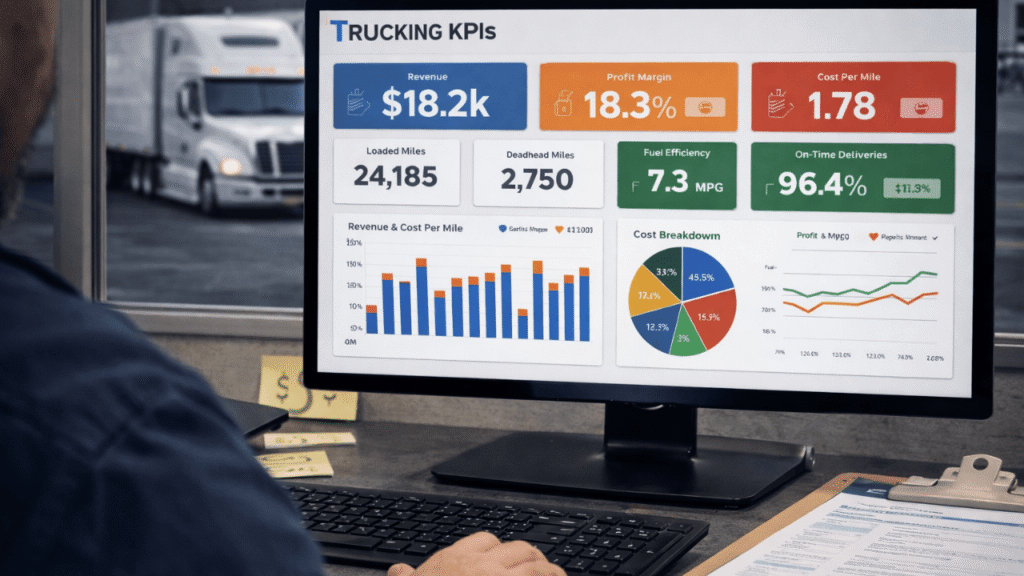
Trucking profitability isn’t just about finding more loads. It’s about protecting fleet profit margins on every mile you run. With rates and expenses constantly shifting, trucking cost control becomes the difference between “busy” and “profitable.” When you manage cost per mile, tighten load planning, prioritize deadhead reduction, and control fuel spend and maintenance costs, you build a business that can withstand market swings.
Table of Contents
Why Trucking Profitability Often Drops (Even When Trucks Are Rolling)
Many fleets assume high utilization automatically means strong margins. In reality, profitability slips when:
- Cost per mile rises faster than revenue per mile
- Deadhead reduction isn’t actively managed
- Fuel spend increases due to idle, speed, or poor fueling habits
- Maintenance costs spike from reactive repairs and downtime
- Driver retention problems lead to churn, empty seats, and service failures
The fix starts with measuring the right numbers and building repeatable habits.
Cost Per Mile: The KPI That Reveals the Truth
If you want consistent trucking profitability, you need to know your cost per mile, accurately and regularly. This single metric ties together operations, dispatch, shop performance, and driver behavior.
What to include in cost per mile
To avoid underestimating expenses, include:
- Fuel spend (plus DEF)
- Maintenance costs (repairs + preventive maintenance)
- Tires
- Driver pay and benefits
- Insurance, permits, tolls
- Overhead allocation (admin, rent, software, etc.)
Simple formula:
Total operating costs ÷ total miles = cost per mile
Once you have it, compare it to revenue per mile by lane, customer, and truck type. That’s how fleets protect fleet profit margins with facts, not gut feel.
Related Article: Understanding Fleet KPIs
Trucking Cost Control: 5 Levers That Drive Real Margin
1) Fuel spend: the fastest place to win or lose
Fuel is one of the biggest controllable expenses. The best fuel spend improvements come from operational discipline, not gimmicks.
Practical actions:
- Set idle limits and track exceptions
- Manage speed policies (small changes add up)
- Keep tires properly inflated and aligned
- Use fueling rules: preferred stops, consistent timing, and purchase limits
Even modest improvements here can strengthen fleet profit margins quickly.
2) Maintenance costs: stop paying for “surprises”
Reactive breakdowns don’t just cost repair dollars, they cost revenue through downtime, late loads, and missed opportunities.
To control maintenance costs:
- Follow consistent PM intervals (miles + engine hours)
- Track repeat failures by unit and component
- Plan shop time around dispatch schedules
- Use standardized parts where possible
A strong preventive approach reduces total cost while improving service reliability.
3) Load planning: profit starts before dispatch
Load planning is where many fleets either protect margin, or erase it. Poor planning causes rushed dispatching, more empty miles, and unnecessary wear on equipment.
Better load planning focuses on:
- Pre-planning to avoid last-minute decisions
- Matching freight to driver hours and equipment specs
- Building predictable lanes and shipper/receiver routines
- Avoiding appointment windows that create detention
4) Deadhead reduction: cut the miles that don’t pay
Deadhead reduction is one of the cleanest ways to improve trucking cost control. Empty miles consume fuel, wages, and maintenance, without generating revenue.
Ways to reduce it:
- Build mini-networks (repeat lanes and customers)
- Keep dispatch zone-based to reduce repositioning
- Negotiate backhaul agreements with key accounts
- Set limits on “acceptable empty miles” per lane
If you reduce deadhead consistently, fleet profit margins improve without raising rates.
5) Driver retention: the hidden profit multiplier
Driver retention impacts profitability more than many fleets realize. High turnover increases:
- Recruiting and onboarding costs
- Unseated trucks and lost revenue
- Training time and safety risk
- Dispatch disruption and service failures
Retention improves when fleets nail the basics:
- Consistent home time and fair routes
- Accurate, on-time pay
- Respectful communication with dispatch
- Reliable equipment (fewer breakdowns and roadside issues)
Strong driver retention stabilizes performance and reduces expensive churn.
A Simple Weekly System for Better Fleet Profit Margins
You don’t need a huge program to improve trucking profitability. You need a weekly rhythm.
Weekly review (30–45 minutes)
- Cost per mile trend (fleet + by unit)
- Fuel spend outliers (truck/driver/lane)
- Highest maintenance costs and downtime units
- Deadhead reduction performance by region/dispatcher
- Driver retention flags (complaints, missed home time, pay issues)
This routine turns trucking cost control into a habit, not a reaction.
Build Profit That Holds Up Over Time
Trucking profitability is earned through consistent execution. When fleets track cost per mile, improve load planning, prioritize deadhead reduction, control fuel spend, reduce maintenance costs, and invest in driver retention, fleet profit margins become more stable, even when markets get unpredictable.
Strengthen Your Fleet’s Profit and Compliance Systems
Need help improving trucking cost control or keeping your fleet road-ready? Reach out to us at www.welocity.ca, call 905-901-1601, or email info@welocity.ca for trucking-related services. Whether it’s ELD setup, compliance training, or vehicle inspections, we have you covered.