
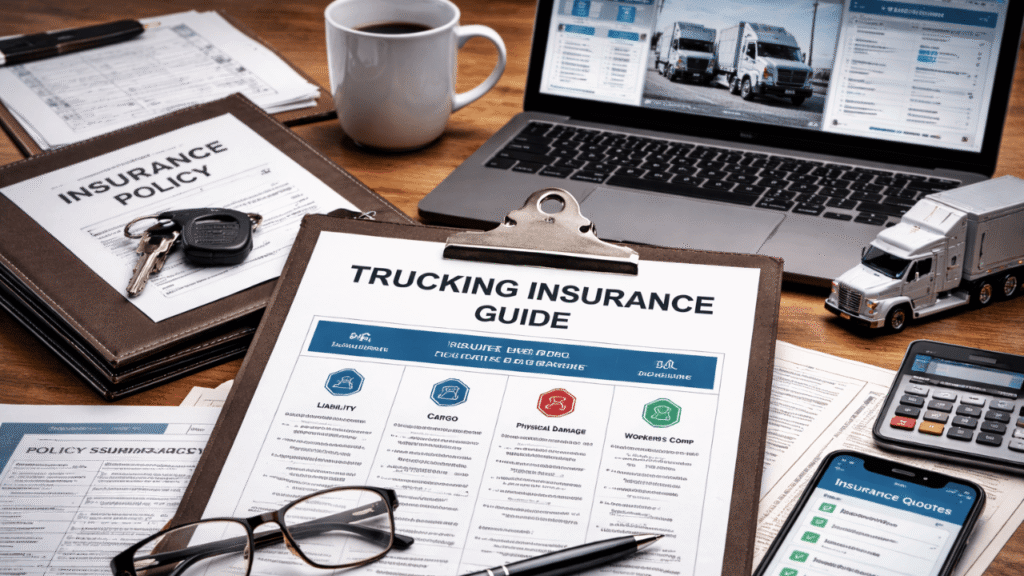
Trucking insurance is one of the highest fixed costs in transportation, and one of the easiest areas to misunderstand. Whether you operate one unit or a growing fleet, the right fleet insurance plan protects your business from lawsuits, cargo losses, and costly downtime. At the same time, choosing the wrong commercial truck insurance (or managing it poorly) can drive up insurance premiums and weaken your cash flow.
Table of Contents
What Is Trucking Insurance (and Why Fleets Need It)
Trucking insurance is a group of policies that protects against the risks of driving commercial vehicles. It usually covers:
- Damage to other people’s property and injuries
- Damage to your trucks and tools
- Freight that was lost or damaged* Costs of legal defense and settlement
For many carriers, proof of insurance is also required to haul certain loads, access customer freight, or satisfy lease/contract requirements.
Key Types of Commercial Truck Insurance Coverage
Not all policies are created equal. Here are the most common coverages fleets rely on.
Liability coverage (the non-negotiable)
Liability coverage helps cover costs if you’re responsible for an accident, including injuries to other people and damage to their property. It typically includes:
- Third-party medical costs
- Property damage repairs
- Legal fees and settlements
Because liability losses can be catastrophic, limits matter. Many shippers and brokers also require specific liability limits before awarding freight.
Cargo insurance (protecting what you haul)
Cargo insurance helps you pay for freight that gets lost, stolen, or damaged while you are in charge of moving it. This could include:
- Stealing
- Damage from a collision
- Spoilage due to temperature (when properly endorsed)
- Load changes (based on the terms of the policy)
Cargo claims can get complicated quickly, so it’s important to know what isn’t covered and what paperwork is required.
Coverage for physical damage (your truck, your property)
If your truck gets damaged in a covered event, physical damage coverage will help pay for the repairs or replacement. It usually has:
- Coverage for accidents
- Full coverage for fire, theft, vandalism, and bad weather
Lenders often ask for this when they lend money for equipment. It can be important for business continuity, even for paid-off trucks.
What Impacts Insurance Premiums for Fleets
Risk is what makes insurance premiums go up. Insurance companies look at both the fleet’s past and its current operations.
Some things that affect premiums are:
- The driver’s history, including tickets, violations, and previous accidents
- History of claims (how often and how bad)
- Radius of operation (short vs. long-haul)
- Type of cargo (high-value, dangerous, temperature-controlled)
- Age and value of the equipment
- How mature the safety program is (training, coaching, and compliance systems)
- Records of maintenance and inspection
To get lower premiums, you need to show the insurance company that you are consistently managing risk.
Risk Management: How to Reduce Losses and Protect Rates
Risk management isn’t just for safety departments. It’s a profitability strategy. Lower risk usually leads to better renewal outcomes over time.
Practical risk management steps fleets can implement
- Checking the MVR and verifying experience before hiring
- Rules for drivers in writing (speed, phones, seatbelts, and tiredness)
- Coaching and safety meetings on a regular basis
- Inspections that are documented and maintenance that is done before problems happen
- Dash cams and telematics (when used to help, not punish)
- Planning routes that stay away from dangerous areas and tight schedules
- A real-life example: fleets that cut down on small accidents (like backing up and low-speed collisions) usually have fewer claims and better negotiations for renewals.
What to Do After an Incident: The Claims Process
A smooth claims process can reduce downtime, lower the risk of legal problems, and prevent small problems from becoming big, costly ones.
Checklist for the claims process:
- Make sure everyone is safe first (get medical help and secure the scene)
- Write down everything (photos, statements, time, and place)
- Tell your insurance company right away (late notice can make coverage harder).
- Keep proof (dash cam footage, ELD logs, inspection reports)
- Use approved channels to set up repairs and towing.
- Keep track of all costs, including rental, downtime, cargo handling, and storage.
- Documentation is often the deciding factor in claims. The more organized you are, the better things usually turn out.
How to Pick the Best Fleet Insurance Structure
When evaluating fleet insurance plans, don’t just focus on the price. Ask:
- Do the limits on liability match what the customer needs?
- Is your cargo insurance right for the freight you carry and its value?
- Are the deductibles reasonable for your cash flow?
- Are the drivers and units listed and updated correctly?* Is the coverage for physical damage enough to cover the cost of replacing it?
After a loss, cheaper coverage with gaps can end up costing a lot more.
Trucking Insurance That Supports Growth, Not Stress
The right trucking insurance protects your operation, supports customer requirements, and keeps you moving after the unexpected. By understanding liability coverage, cargo insurance, and physical damage coverage, and strengthening risk management and your claims process, you can control insurance premiums over time and build a more resilient business.
Get Support for a Safer, More Insurable Operation
Need help strengthening your safety and compliance systems so your fleet is easier to insure and operate? Reach out to us at www.welocity.ca, call 905-901-1601, or email info@welocity.ca for trucking-related services. Whether it’s ELD setup, compliance training, or vehicle inspections, we have you covered.