
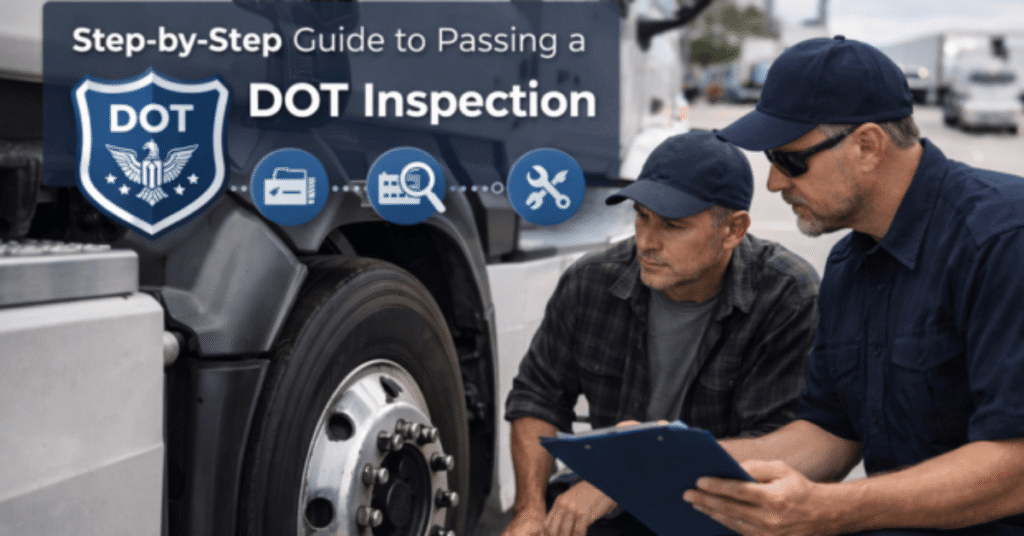
Knowing how to pass a DOT inspection is essential for drivers and fleets operating in today’s highly regulated environment. Roadside compliance checks can happen anytime, anywhere, and a failed review may lead to violations, delays, and costly DOT HOS fines.
This inspection guide walks you through the process step by step, so you know exactly what enforcement officers look for and how to stay compliant before, during, and after a safety check.
Table of Contents
What Is a DOT Inspection?
A DOT inspection is a roadside or facility-based safety evaluation conducted by enforcement officers to verify compliance with federal trucking regulations. These reviews are standardized through the Commercial Vehicle Safety Alliance (CVSA) and apply to drivers, vehicles, and carriers.
The goal is simple: ensure trucks on the road are safe and compliant.
Understanding DOT Roadside Inspections and CVSA Levels
There are multiple CVSA inspection levels, each with a different scope.
Common Inspection Levels
- Level I – Full driver and vehicle inspection
- Level II – Walk-around driver and vehicle inspection
- Level III – Driver-only inspection (documents and HOS)
- Level V – Vehicle-only inspection
- Level VI – Hazardous materials inspection
Most roadside stops involve Level I, II, or III inspections.
Step-by-Step Inspection Checklist
Step 1: Prepare Driver Documentation
Missing or incomplete paperwork is a common reason compliance reviews fail.
Ensure drivers have:
- Valid CDL
- Current medical certificate
- Record of duty status (paper or ELD)
- Shipping documents (if applicable)
Proper documentation supports inspection readiness and speeds up the process.
Step 2: Review Hours of Service Logs
Inspectors closely examine Hours of Service compliance during enforcement checks.
Check for:
- Accurate and current logs
- Proper use of personal conveyance and yard move
- Supporting documents matching log entries
HOS violations are a major source of DOT HOS fines.
Step 3: Inspect the Vehicle Before the Trip
Pre-trip inspections are critical to meeting truck safety requirements.
Drivers should check:
- Brakes and brake adjustment
- Lights and reflectors
- Tires and wheels
- Steering and suspension
- Emergency equipment
Mechanical defects can result in out-of-service orders.
Step 4: Know What Inspectors Look For
During a compliance inspection, officers typically focus on:
- Driver credentials
- HOS compliance
- Vehicle safety condition
- ELD operation
- Safety equipment
Staying calm and cooperative helps the review go smoothly.
Step 5: Respond Professionally During the Inspection
How a driver interacts with enforcement officers matters.
Best practices:
- Be polite and respectful
- Answer questions clearly
- Provide documents promptly
- Avoid arguing roadside
Professional conduct reduces tension and delays.
Step 6: Address Violations Immediately
If a violation is found during the safety check:
- Understand the citation
- Correct the issue as soon as possible
- Document corrective actions
Quick response helps maintain fleet inspection compliance and reduces repeat issues.
Common DOT Inspection Violations to Avoid
Many violations discovered during roadside inspections are preventable.
Common issues include:
- Incomplete or inaccurate logs
- Vehicle lighting defects
- Tire and brake problems
- Missing documents
- Improper ELD use
Avoiding these issues helps reduce repeat enforcement actions.
How Fleets Can Improve Inspection Pass Rates
Fleets that consistently pass compliance checks focus on:
- Regular driver training
- Preventive maintenance programs
- Internal compliance audits
- Clear inspection checklists
Preparation should be ongoing, not last-minute.
FAQs About Passing a DOT Inspection
How long does a DOT roadside inspection take?
Most inspections last 15–45 minutes, depending on the inspection level.
Can a driver be put out of service during an inspection?
Yes. Serious violations can result in immediate out-of-service orders.
Do inspections affect CSA scores?
Yes. Violations discovered during inspections directly impact CSA scores.
How often should fleets prepare for inspections?
Inspection readiness should be continuous, supported by routine checks and audits.
Staying Inspection-Ready Year-Round
Passing a DOT inspection isn’t about luck—it’s about preparation. By following this inspection checklist, training drivers, and maintaining vehicles properly, fleets can reduce risk, avoid fines, and keep operations moving without interruption.
Need Help Improving DOT Inspection Results?
DOT inspections can be stressful, but preparation makes all the difference. Reach out to us at www.welocity.ca, call 905-901-1601, or email info@welocity.ca for help with inspection preparation, compliance training, ELD support, and fleet safety reviews. We’re here to help you stay inspection-ready with confidence.