
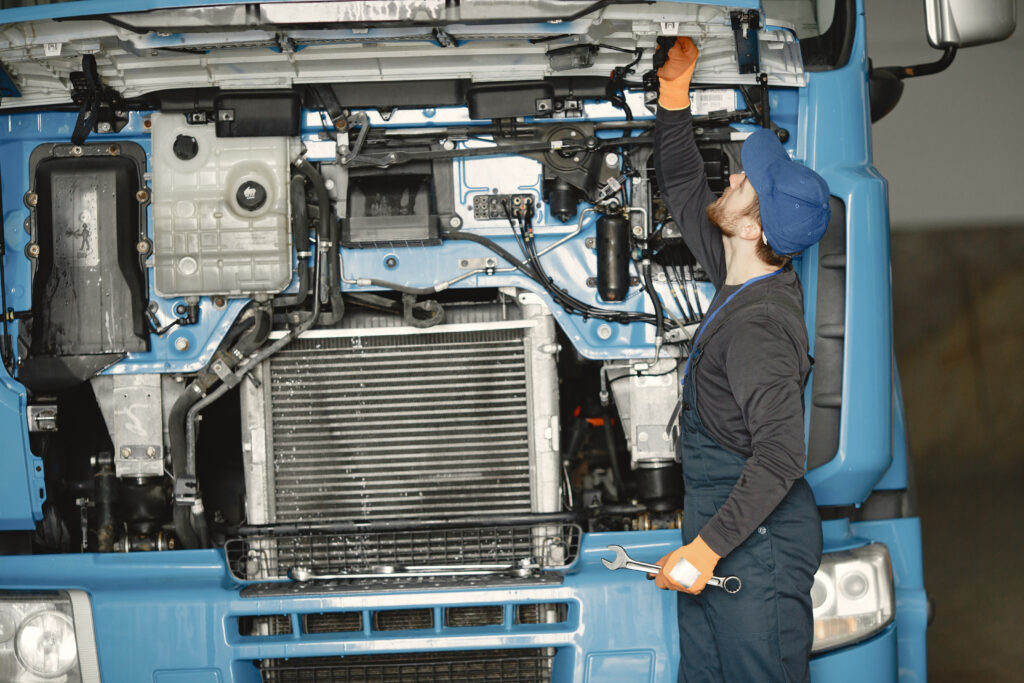
If you’re trying to reduce fleet maintenance costs, you’re not alone. Maintenance is one of those expenses that doesn’t stay “steady.” One bad month of breakdowns can wipe out a lot of profit, especially if you’re also losing revenue from trucks sitting.
The trick is reducing cost without cutting corners. Because in trucking, skipped maintenance usually comes back as a roadside call, a missed delivery, or a DOT issue, none of which are cheap.
Table of Contents
Start With PM Schedules That Match Reality
A lot of fleets have PM schedules on paper… and then operations gets busy and everything slides. That’s when small issues turn into expensive ones.
A good PM schedule should account for:
- Mileage (obviously), but also engine hours and duty cycle
- Loads and terrain (city stop-and-go vs highway is a different world)
- Seasonality (winter is harder on everything)
- Your specific equipment history (some units are “repeat offenders”)
Downtime Reduction: Where the Real Savings Are
Many people think the repair bill is the cost of maintenance. But the biggest loss is often time, because a truck that isn’t moving isn’t making money.
Ways to reduce downtime:
- Plan PM for natural breaks in the lane, like home time or days with low volume.
- Order common wear items ahead of time so you don’t have to wait for parts.
- Make inspection checklists the same for all drivers so they can find problems early
- Keep track of units that keep failing and fix the problem at its source
You can save a lot of money if you can cut down on unplanned downtime for each truck by even a day or two a year.
Choose between shop and outsource based on the type of work
The shop vs outsource decision shouldn’t be emotional. It should be about how fast, good, and cheap each job is.
It makes sense for the in-house shop to:
- Regular PMs and checks
- Tires, brakes, lights, and easy fixes
- Quick fixes that keep downtime to a minimum
Outsourcing is often a good idea for:
- Work covered by the dealer’s warranty
- Specialized diagnostics for the engine, emissions, and electrical systems
- Overflow when your store is full
- Fixes that need tools you don’t have
Many fleets use a hybrid approach, doing the “repeatable” work themselves and hiring someone else to do the heavy diagnostic work.
Inventory of Parts: Don’t Buy Too Much or Wait Too Long
It’s hard to keep track of parts. Having too much inventory ties up money. When you don’t have enough inventory, you have to wait and pay for shipping.
A simple way that works:
- Keep a lot of the parts you use a lot (like filters, belts, lights, and common sensors) in stock.
- Keep an eye on what breaks down the most by unit type and mileage range
- Set reorder points so you don’t have to guess
- When you can, make sure that all the parts on the fleet are the same.
Reality check: Your inventory costs will go up if you have a lot of different truck makes and models with parts that don’t work with each other. Standardization lowers the cost of long-term maintenance.
Tire Management: The Quiet Budget Killer
Tightening up tire management is a quick and easy way to win. Tires have an effect on:
- How much gas it uses
- Issues with safety and the CSA
- Time off because of blowouts
- How often to replace
Important habits to save money on tires:
- Regularly checking the pressure (not just “when we remember”)
- Alignments on time (especially after suspension work)
- Change the tread depth and track it every PM
- Talk to drivers about habits that wear out tires (like going too fast, making hard turns, or driving on the curb).
If you treat tires like a real program, they are one of the easiest things to control.
Maintenance KPIs: Track What You Can Control
If you’re not tracking numbers, you’re basically running on gut feel. A few simple maintenance KPIs make it obvious where money is leaking.
KPIs worth tracking:
- Cost per mile (maintenance only)
- PM compliance rate (did trucks get serviced on time?)
- Breakdown rate (per 10,000 miles, for example)
- Downtime hours (planned vs unplanned)
- Repeat repairs (same issue returning)
- Tire cost per mile
You don’t need a complicated dashboard. Even a monthly spreadsheet review can highlight patterns quickly.
Preventive Maintenance Trucking: The “Boring” Strategy That Works
Preventive maintenance trucking isn’t exciting, but it’s how strong fleets stay profitable. The goal is not “zero repairs.” That’s not realistic. The goal is:
- Fewer emergency repairs
- Less roadside downtime
- More predictable costs
- Better safety and compliance outcomes
If your fleet is constantly reacting, preventative maintenance is how you move from chaos to control.
Reduce Fleet Maintenance Costs by Fixing the Right Things Earlier
If you’re serious about reducing fleet maintenance costs, focus on the basics that actually move the needle: reliable PM schedules, smart shop vs outsource decisions, lean but effective parts inventory, tighter tire management, and a short list of maintenance KPIs that you review consistently. That’s how you reduce maintenance costs without gambling with uptime.
Want Help Keeping Your Fleet Maintenance-Ready?
Reach out to us at www.welocity.ca, call 905-901-1601, or email info@welocity.ca if you need trucking-related support. Whether it’s ELD setup, compliance training, or vehicle inspections, we have you covered—and we can help you build systems that reduce downtime and keep your fleet running strong.