
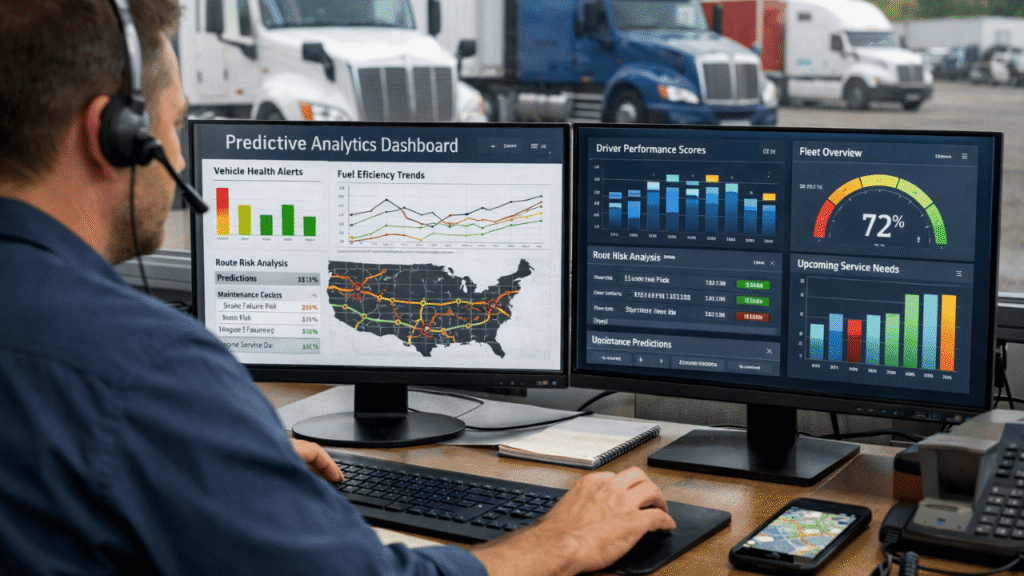
Predictive analytics in trucking sounds fancy, but the idea is pretty simple: use your past data to make better calls before problems arise. Instead of reacting to breakdowns, late loads, or slow weeks, fleet predictive analytics helps you spot performance trends early, then plan around them.
If you’ve ever said, “We didn’t see that coming,” this is the toolset that makes those surprises happen less often. And when you use it right, fleet planning gets calmer, more accurate, and (usually) more profitable.
Table of Contents
What Is Predictive Analytics in Trucking, Really?
Predictive analytics in trucking uses historical and real-time data to estimate what’s likely to happen next. Think of it like this:
- Descriptive analytics: What happened?
- Diagnostic analytics: Why did it happen?
- Predictive analytics trucking: What’s likely to happen next?
The goal isn’t to be perfect. The goal is to be less wrong than guessing, and to make decisions earlier, when you still have options.
Why Fleet Predictive Analytics Matters for Fleet Planning
Most fleets already have data from ELDs, telematics, fuel cards, shop records, and dispatch history. The problem is that it ends up in different places and isn’t used consistently.
Fleet predictive analytics puts all that information together to help with real operational decisions like:
- When to set up PM without messing up dispatch* The number of trucks you’ll need next month
- Which lanes are most likely to cause delays or hold-ups
- Which units are turning into “problem trucks”?
- Where the risks to safety are getting higher
In short, it’s fleet planning with fewer knowledge gaps.
Related Article: Fleet Data Management: How Trucking Data Analytics Improves Performance
Demand Forecasting: Know What’s Coming Before the Phones Light Up
Demand forecasting uses your past shipments (and sometimes customer trends) to estimate how much you’ll ship in the future.
What demand forecasting can do for you:
- Making plans for drivers’ schedules and time at home
- Staying away from problems with last-minute load coverage
- Getting ready for seasonal spikes (or drops)
- Setting realistic goals for how much money you want to make
If the same customer spikes at the end of every quarter, your data will show it. Then you can plan ahead for how much space you’ll need, rather than rushing.
Planning for capacity means having the right trucks, drivers, and time.
Predictive analytics in trucking really comes in handy for capacity planning. You’re not just asking, “Will we be busy?” You’re also asking:
- Are there enough drivers available?
- Do we have the right tools for the mix of freight?
- Are we about to run out of time for maintenance?
- Are we too busy on some days of the week?
Things to keep an eye on for capacity planning.
- There aren’t enough trailer pools.
- Driver hours getting shorter (HOS patterns by lane)
- Conflicts with repeat appointments
- More empty miles when the volume changes
You can change your dispatch strategy before it becomes missed service by watching these patterns.
Maintenance Forecasting: Fewer Breakdowns, Less Downtime
Maintenance forecasting is often the easiest place to get ROI from fleet predictive analytics. It helps you predict when a truck is likely to need attention, before it becomes a roadside issue.
What maintenance forecasting is based on
- Mileage and engine hours
- Repair history and repeat failures
- Fault codes and telematics alerts
- Downtime patterns by unit
- Parts replacement intervals
This is especially useful for fleets that feel like they’re always “catching up” in the shop. A proactive schedule reduces surprise downtime and protects delivery performance.
Risk Prediction: Safety and Claims Don’t Come Out of Nowhere
Risk prediction uses driver behavior and incident history to flag higher-risk situations early. It’s not about blaming drivers, it’s about preventing costly events.
Useful risk prediction inputs
- Speeding and harsh events (from telematics)
- Route risk (weather-prone areas, heavy congestion, tight yards)
- Backing/low-speed incident patterns
- Fatigue indicators (long duty cycles, frequent night driving)
- Claims history trends
Good risk prediction gives safety teams a short list of “who needs coaching this week,” rather than trying to manage everything at once.
Data Modeling: Keep It Practical, Not Perfect
Data modeling is the math behind predictions. But here’s the honest truth: fleets don’t need a complicated model to get value.
Start with “good enough” modeling
Begin with:
- Simple trend lines (week-over-week, month-over-month)
- Maintenance triggers (based on repeat repairs + engine hours)
- Lane performance trends (detention, on-time rates, empty miles)
- Driver score patterns (coaching before issues escalate)
As your data improves, you can get more advanced. But don’t wait for “perfect data” to start, most fleets never get there.
Performance Trends: The Early Warning System You Want
Performance trends are what make fleet planning smarter over time. Instead of one-off reports, you’re watching signals like:
- Rising cost per mile in specific units
- More detention at certain receivers
- MPG dropping by lane or driver group
- Increased late deliveries in a region
- Growing maintenance costs on older equipment
These trends help you make changes before the problem becomes expensive.
Quick Steps to Implement Predictive Analytics Trucking (Without Overcomplicating It)
- Pick one goal first (maintenance forecasting is a common win)
- Standardize your data inputs (unit numbers, driver IDs, dates)
- Build a simple dashboard (weekly trends, not daily noise)
- Set action triggers (what happens when a threshold is hit?)
- Review weekly and adjust (small improvements compound fast)
If the data doesn’t lead to a decision, it’s just a report.
Plan Earlier, Stress Less
Predictive analytics trucking isn’t about turning your fleet into a tech company. It’s about using fleet predictive analytics to spot performance trends early, improve demand forecasting, and make fleet planning more consistent. Add maintenance forecasting, capacity planning, and risk prediction, and you’ll spend less time putting out fires and more time running a controlled operation.
Make Data Work for Your Fleet, Not Against It
Need help improving fleet planning, tightening compliance processes, or getting your systems set up properly? Reach out to us at www.welocity.ca, call 905-901-1601, or email info@welocity.ca for trucking-related services. Whether it’s ELD setup, compliance training, or vehicle inspections, we have you covered.