
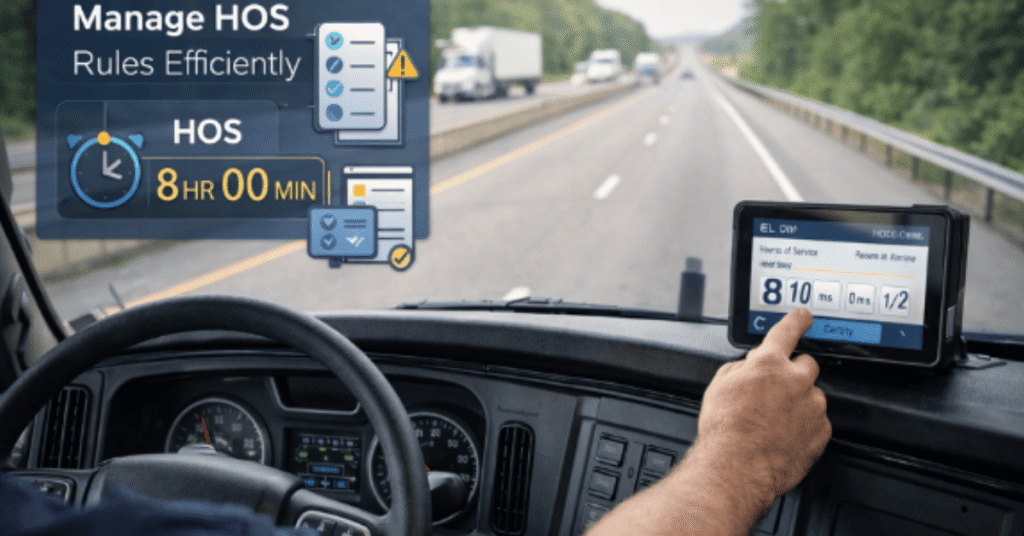
Learning how to manage HOS rules efficiently is essential for trucking companies that want to stay compliant, reduce driver fatigue, and avoid penalties. Poor hours of service compliance often leads to violations, audits, and costly DOT HOS fines, while effective HOS management improves safety and operational efficiency.
This guide explains practical, real-world strategies for HOS management that fleets can implement immediately to stay compliant and productive.
Table of Contents
Understanding Hours of Service Rules
Hours of Service rules limit how long commercial drivers can operate to reduce fatigue-related crashes. These regulations apply to most carriers and are enforced through inspections, audits, and electronic logs.
Key truck driver HOS rules include:
- Maximum 11 hours of driving time
- 14-hour on-duty window
- 60/70-hour weekly limits
- Mandatory rest breaks
Understanding these basics is the foundation of efficient compliance.
Why Efficient HOS Management Matters
Effective fleet HOS compliance goes beyond avoiding tickets. It directly impacts:
- Driver safety and alertness
- On-time deliveries
- CSA scores
- Insurance costs
- Audit risk
Fleets that fail to manage HOS proactively often experience recurring violations and operational disruptions.
Key Strategies to Manage HOS Rules Efficiently
1. Use HOS Tracking Software
Modern HOS tracking software gives fleets real-time visibility into driver hours and remaining availability.
Benefits include:
- Automatic alerts before limits are reached
- Accurate log records
- Easier compliance reporting
This reduces guesswork and helps dispatchers make informed decisions.
2. Implement Effective ELD HOS Management
ELDs are mandatory for most fleets, but compliance depends on proper use.
Strong ELD HOS management includes:
- Correct device setup and configuration
- Daily log certification
- Reviewing unassigned driving events
- Proper use of personal conveyance
ELDs work best when paired with oversight and training.
3. Train Drivers on FMCSA HOS Regulations
Many violations occur simply because drivers misunderstand the rules.
Training should cover:
- Daily and weekly limits
- Break requirements
- Proper duty status changes
- Inspection procedures
Regular refreshers help drivers stay compliant and confident.
4. Plan Routes and Schedules Strategically
Efficient HOS scheduling helps prevent violations before they happen.
Best practices include:
- Accounting for traffic and weather delays
- Scheduling loads around available drive time
- Avoiding last-minute dispatch changes
Better planning leads to fewer compliance issues and improved productivity.
5. Conduct Regular Internal HOS Reviews
Routine log reviews help prevent HOS violations and identify trends early.
Internal audits should check:
- Log accuracy
- Supporting documents
- Repeat violations
- Driver behavior patterns
Correcting issues early reduces audit risk later.
Related Article: How to Correct ELD Discrepancies Before Compliance Reviews
Common HOS Management Mistakes to Avoid
- Relying only on ELDs without oversight
- Ignoring minor violations
- Poor communication between dispatch and drivers
- Lack of documented corrective actions
These mistakes often result in repeated violations and enforcement action.
Related Article: Common ELD Mistakes That Can Cost Your Fleet
How HOS Violations Lead to DOT Fines
When FMCSA HOS regulations are violated, fleets may face:
- Civil penalties
- Out-of-service orders
- CSA score increases
- Higher inspection frequency
Consistent violations almost always trigger audits.
FAQs About Managing HOS Rules
What is the best way to manage HOS rules?
Using HOS tracking software combined with driver training and regular log audits is the most effective approach.
Can good HOS management reduce DOT fines?
Yes. Proactive HOS management significantly lowers the risk of violations and DOT HOS fines.
How often should fleets review HOS logs?
Weekly reviews are recommended, with deeper monthly audits for trend analysis.
Do small fleets need HOS management systems?
Absolutely. Even small fleets are subject to the same regulations and enforcement standards.
Manage HOS Rules Efficiently
Knowing how to manage HOS rules efficiently is critical for long-term compliance and operational success. With the right tools, training, and processes in place, fleets can maintain strong hours of service compliance, protect drivers, and avoid costly penalties. Effective HOS management isn’t just about following rules. It’s about building a safer, more reliable operation.
Need Support With HOS Compliance?
Managing HOS rules doesn’t have to be complicated. Reach out to us at www.welocity.ca, call 905-901-1601, or email info@welocity.ca for help with HOS management, ELD setup, compliance training, and fleet audits. We’re here to help you stay compliant and efficient year-round.