
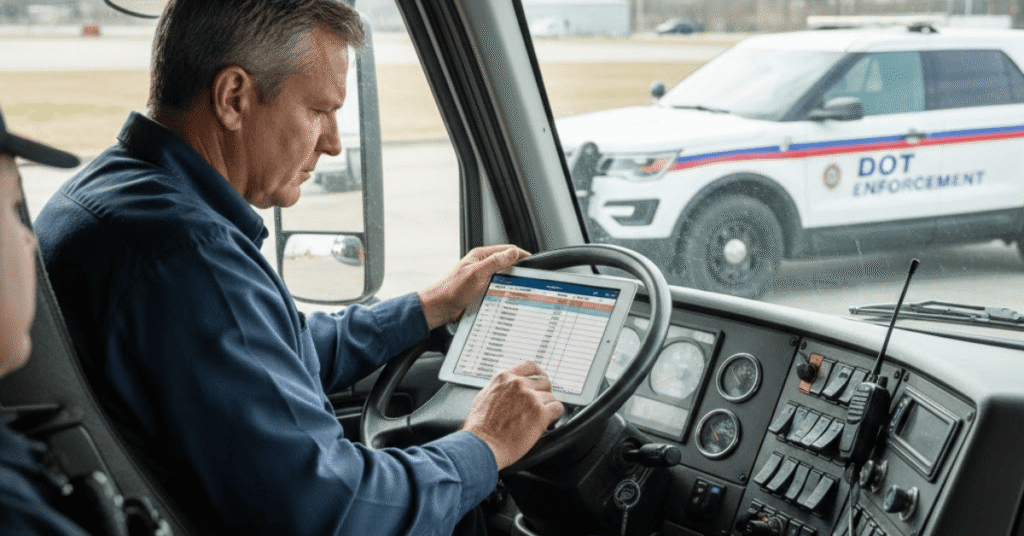
Log book errors are one of the most common reasons drivers and fleets face compliance issues during roadside inspections and audits. Whether you use paper logs or electronic logging devices (ELDs), even small mistakes can quickly turn into logbook violations, fines, or out-of-service orders.
Understanding the most frequent DOT log book violations is the first step toward staying compliant. Below, we break down the key hours of service logbook mistakes inspectors look for and how you can avoid them.
Table of Contents
Why Log Book Accuracy Matters
Logbooks are legal records used by enforcement officers to verify compliance with Hours of Service (HOS) regulations enforced by U.S. Department of Transportation and Federal Motor Carrier Safety Administration.
Inaccurate logs can lead to:
- Citations and fines
- Log book falsification penalties
- Negative CSA scores
- Increased audit risk
Common Log Book Errors That Trigger Violations
1. Incomplete or Missing Log Entries
One of the most common logbook mistakes is leaving required fields blank.
Examples include:
- Missing date or driver signature
- No shipping document or trailer number
- Unrecorded duty status changes
These paper logbook violations are easy to spot and often result in immediate citations.
2. Incorrect Hours of Service Calculations
HOS log book errors often happen when drivers miscalculate:
- Driving time
- On-duty not driving time
- Required rest periods
Even a small math error can push a driver over legal limits, triggering hours of service logbook mistakes during inspections.
3. False or Inconsistent Duty Status Changes
Logging “off duty” while actually loading, fueling, or waiting at a dock is considered falsification.
Red flags for inspectors include:
- Logs that show no on-duty time for an entire shift
- Frequent edits without explanation
- Duty status that does not match supporting documents
These issues can result in severe log book falsification penalties.
4. ELD Logbook Errors
While ELDs reduce manual mistakes, they still generate violations when:
- Drivers fail to certify logs
- Edits are made incorrectly or excessively
- Unassigned drive time is ignored
ELD logbook errors are closely reviewed during compliance audits.
5. Mismatch Between Logs and Supporting Documents
Logs must align with:
- Fuel receipts
- Bills of lading
- Dispatch records
Discrepancies between documents and logs are a leading cause of DOT logbook violations.
How to Avoid DOT Logbook Violations
To reduce risk, fleets and drivers should:
- Review logs daily for accuracy
- Train drivers on proper HOS rules
- Audit ELD data regularly
- Keep supporting documents organized
- Correct errors promptly with proper annotations
Consistent internal reviews help avoid DOT logbook violations before inspectors find them.
Related Article: Top HOS Violations Truckers Should Avoid
FAQs: Log Book Errors & Violations
What are the most common log book errors?
The most common log book errors include missing entries, incorrect HOS calculations, falsified duty status, and mismatched supporting documents.
Can logbook mistakes lead to fines?
Yes. Logbook violations can result in citations, fines, CSA score impacts, and in serious cases, out-of-service orders.
Are ELDs safer than paper logs?
ELDs reduce paper logbook violations, but ELD logbook errors still occur if logs are not reviewed, certified, or corrected properly.
How long should logbooks be kept?
Drivers and carriers must retain logs and supporting documents for at least six months.
Stay Ahead of Log Book Violations
Log book errors may seem minor, but they carry serious consequences. By understanding common logbook mistakes and implementing regular reviews, drivers and fleets can reduce violations, protect safety scores, and stay compliant year-round.
Need Help Keeping Your Logs Compliant?
Staying on top of logbook violations takes time, training, and the right systems. If you need expert help, Welocity is here to support you. Reach out to us at www.welocity.ca or call 905-901-1601 and email at info@welocity.ca. Whether it is ELD setup, compliance training, or vehicle inspections, we have you covered.