
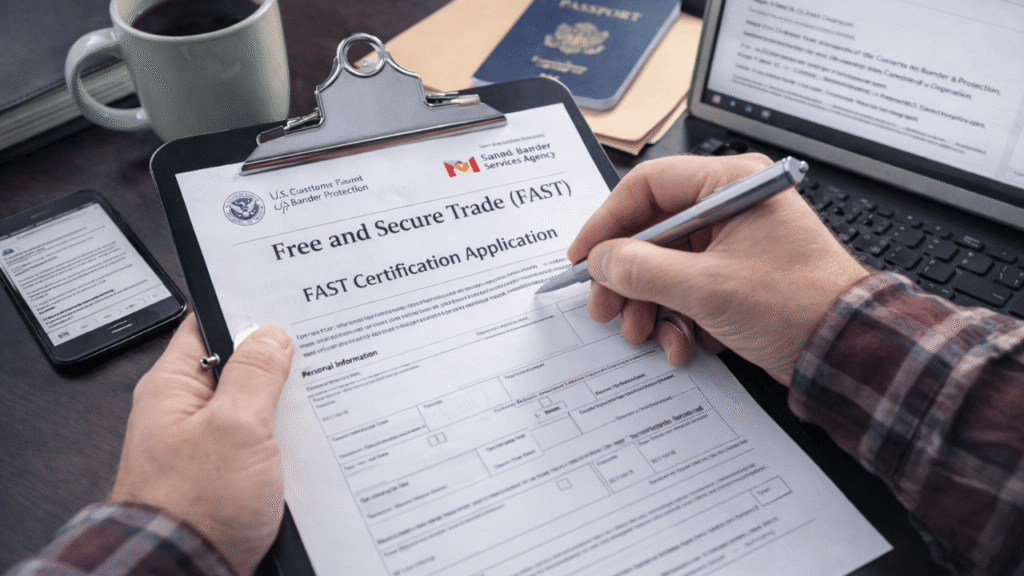
If you run cross-border freight, you’ve probably heard dispatch say, “We need FAST.” And they’re not wrong. FAST certification can help eligible drivers use dedicated lanes and reduce inspection-related delays, especially when your shipment and paperwork are in good order.
FAST certification (Free and Secure Trade) is basically a “trusted, low-risk” program for Canada–U.S. commercial freight. It’s run by CBP and CBSA, and if your driver, carrier, and shipment qualify, you can use FAST lanes at certain crossings, so you spend less time stuck in the regular lineup and more time actually moving.
Table of Contents
How to Apply for FAST Certification for Trucking
This is what many fleets don’t understand: drivers apply through the U.S. Trusted Traveler Programs system, which includes background checks and an interview after conditional approval.
This is what a practical application flow looks like:
- Before you pay the fee, make sure the driver is qualified.
To be eligible, you usually have to be at least 18 years old, have a valid driver’s license, and be able to enter both Canada and the United States.
- Fill out the online application and pay the fee.
Since this is a driver-based app, each driver needs to submit and pay for their own.
- Wait for conditional approval before making the interview appointment.
The driver sets up an in-person interview at an approved enrollment site after the application has been reviewed.
- Go to the interview and finish the steps to sign up.
The interview verifies the driver’s identity, reviews the application, and ensures the driver meets the program’s requirements.
- After approval, make sure your documents are up to date.
FAST memberships usually last several years, but your identification and border-entry papers must remain valid throughout.
To make it easier for your drivers to obtain FAST certification, create a simple internal checklist that includes required documents, expiration dates, and interview reminders. Then, give one person the job of keeping track of how things are going. That stops people from rushing around at the last minute and missing appointments.
FAST Program Requirements for Carriers
This is where people get confused: there’s “FAST for drivers,” and then there’s what the shipment needs to qualify for FAST lanes. FAST works best when the whole chain lines up, driver, carrier, importer, and the load paperwork.
On the Canadian side, carriers typically align FAST access through related security/trusted-trader programs. In practice, many Canadian carriers support FAST operations by maintaining the appropriate security program approvals and keeping their compliance program tight.
In plain English: FAST certification works best when your operation runs clean end-to-end. Think of it as a cross-border program that rewards low-risk, well-documented freight.
What FAST Certification Actually Helps With
The main value of FAST certification is expedited clearance through designated lanes at certain land border ports, when the load qualifies.
But don’t oversell it internally. FAST won’t fix:
- Messy paperwork
- Missing shipment details
- A driver who can’t confidently follow the lane process
- Poor load planning or last-minute document changes
To make FAST certification pay off, build habits around it:
- Confirm lane eligibility during dispatch, not at the booth
- Standardize cross-border paperwork checks before the truck rolls
- Train drivers on what to present and how to stay calm and consistent
That’s how FAST certification turns time saved into “Why are we still stuck?” instead.
Common Mistakes That Slow Down FAST Certification
If you want fewer delays, avoid these common issues:
- Applying before confirming eligibility. If a driver has admissibility problems, the process can stall or end in denial.
- Letting documents expire. FAST only works when a driver’s documents and status stay valid, not just at the time of application.
- Treating it like a one-time task. You’ll need renewals and ongoing consistency to keep FAST certification useful day to day.
- Confusing driver approval with load eligibility. A FAST-approved driver doesn’t automatically mean every load qualifies for FAST lanes.
Also, make sure your team understands roles. Drivers go through the application and interview process, while carriers need the right internal controls and program alignment to use FAST lanes consistently.
Make Cross-Border Certification Worth It on Every Run
Once you get FAST certification, don’t stop at “approved.” Train drivers on your FAST-ready routine:
- Confirm the load qualifies before dispatch
- Double-check documents before arrival
- Set expectations for the border crossing (lane choice, documents ready, no surprises)
Fleets that win with certification treat it like a repeatable process, not a one-time project.
Keep Your FAST Certification Process Simple and On Track
FAST certification is one of those investments that pays off when you run consistent freight and keep your compliance tight. Apply correctly, keep documents current, and align your carrier practices so FAST lanes actually work for you, day after day.
Need Help With FAST Certification and Cross-Border Readiness?
Reach out to us at welocity.ca, call 905-901-1601, or email info@welocity.ca if you need trucking-related services. Whether it’s compliance guidance, documentation prep, or cross-border support, we’ve got you covered.