
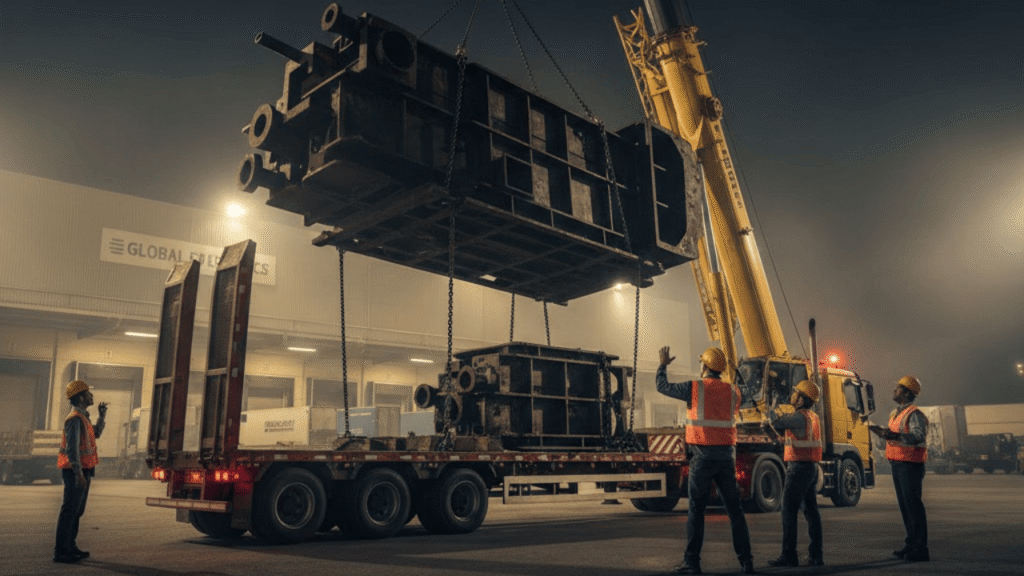
Running heavy loads isn’t just “bigger trailer, bigger truck.” The moment your load pushes past legal limits, you step into the world of heavy hauls specialty permits, and that’s where planning matters as much as horsepower.
These permits exist to protect roads, bridges, and the public. They also protect you from fines, shutdowns, and costly reroutes. The trick is knowing what agencies want, what details actually slow approvals, and how to set your move up so it goes smoothly the first time.
Table of Contents
Specialty Permits Required for Heavy Haul Loads
When a load exceeds normal legal size or weight, most jurisdictions require a permit for the specific move and route. The Federal Highway Administration notes that states can issue special permits for vehicles that exceed standard limits, and that permits are typically issued only for routes that meet each state’s thresholds.
So what triggers heavy hauls specialty permits? It’s usually one (or more) of these:
- Over legal width, height, or length
- Over the legal gross weight or axle weight
- A load that’s “non-divisible” (meaning you can’t reasonably break it down into smaller pieces)
- Travel that requires special routing or restricted travel times
This is where oversize permits and overweight permits come into play, often together. Each state or province sets its own thresholds and rules, so a move that’s “fine” in one area can require a different permit type two hours down the road.
Bottom line: heavy hauls specialty permits are route-specific for a reason, your route must be legal for the load, not just your equipment.
How To Apply for Overweight and Oversized Permits
If you want heavy hauls specialty permits approved quickly, you need to think like a permit officer. They need to know the exact dimensions, weights, axles, and route that makes sense.
This is the clean and useful way to do it:
- Check and measure
Don’t make a guess. Check the overall width, height, length, gross weight, axle weights, and space between axles.
- Pick a route that makes sense first
Your route determines everything, including bridge limits, construction zones, curfews, and whether you need an escort.
- Send in a full application
Your permit request (the step in the permit process) usually requires information about your vehicle, the load, the route, the dates and times, and the carrier. Expect delays if your data doesn’t match.
- Give yourself some time to plan ahead
Some permits can be issued quickly, but others, like annual permits or superload-style moves, take longer. Caltrans, for instance, says that processing annual permits can take at least 14 business days.
When you treat heavy hauls specialty permits as a project, rather than a quick form, you get fewer surprises and fewer phone calls mid-move.
What a Route Survey Really Does
A route survey is your “prove it” document. It confirms that your planned route can physically handle the load, provides turn-by-turn guidance, and identifies hazards such as tight turns, overhead clearances, bridge limitations, and work zones.
FHWA describes the purpose of a route survey as documenting the route turn by turn and identifying difficulties and restrictions along the route, basically, risk identification and contingency planning.
Some DOTs define it similarly as a route analysis and report that documents locations of concern for risk or potential damage.
In the real world, a solid route survey can save you from the worst kind of delay: finding out too late that your load can’t legally (or physically) pass.
Escort Requirements: When You Need Pilot Cars or Police
Escort requirements depend on your size, weight, and route, plus the rules of each jurisdiction. Some moves need one pilot car, others need two, and certain dimensions or routes trigger police escorts.
Even if you don’t memorize every threshold, remember this: escorts are often tied to risk, visibility, lane control, intersection handling, and tight infrastructure. When you’re planning heavy-haul specialty permits, factor in escorts early because they affect scheduling, cost, and travel windows.
Making Heavy Hauls Specialty Permits Less Stressful
If you want heavy hauls specialty permits to feel routine (instead of chaos), keep your planning tight:
- Confirm “as-loaded” numbers, not estimated numbers
- Match your application to your equipment, including axle setup and spacing
- Plan around restrictions, like curfews, weather limits, or construction
- Keep your paperwork organized so you can show permits and conditions quickly
Most delays don’t happen because the load is big. They happen because the plan is fuzzy.
Keep Your Next Move Smooth and Legal
Heavy hauls specialty permits are all about controlling risk, on paper before you control it on the road. When you lock in accurate dimensions and weights, plan a smart route, and handle escorts and surveys upfront, you move faster and with fewer interruptions.
Need Help Getting Heavy Haul Permits Done Right?
Reach out to us at welocity.ca, call 905-901-1601, or email info@welocity.ca for trucking-related services. Whether it’s compliance support, inspections, or help planning heavy hauls and specialty permits, we’ll help you keep the move safe, legal, and on schedule.