
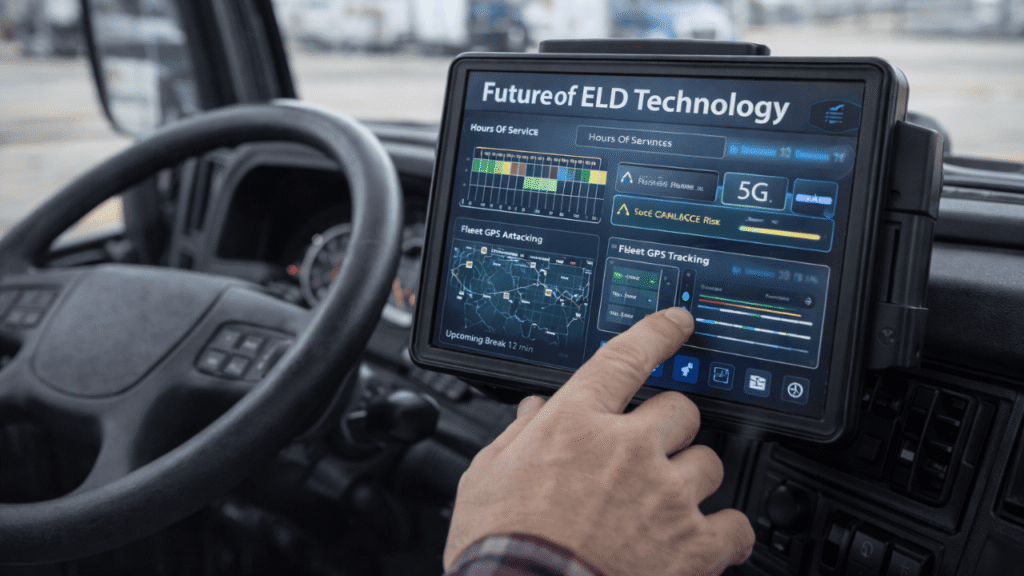
It’s not just about keeping track of hours, the future of ELD technology is about making compliance feel less like a chore and more like a built-in advantage. Fleets already use ELDs to stay compliant, but the next wave will make the tools easier to use, more connected, and more proactive. And if you’ve ever thought, “There has to be a smarter way than chasing edits and fixing logs after the fact,” you’re definitely not alone.
Table of Contents
Why the Future of ELD Technology Matters More Than Ever
For many fleets, ELDs initially became a must-have due to regulations. Now they’re becoming the center of the operation’s data flow.
Here’s why the future of ELD technology matters:
- Fleets want fewer violations without adding paperwork.
- Drivers want tools that don’t slow them down.
- Safety teams need cleaner data, faster.
- Dispatch wants accurate ETAs and fewer surprises.
When ELD data connects smoothly with the rest of your operation, you spend less time arguing about logs and more time improving performance.
Emerging ELD Features in Fleet Management Technology
This is where things get interesting. The next generation of ELD platforms will feel less like a “digital logbook” and more like a fleet operating system.
Expect to see more of these features show up (or get better fast):
1) Smarter automation that reduces taps
Instead of drivers constantly confirming the obvious, systems will auto-suggest actions based on context, like location, engine data, and common workflows.
2) Better integration across systems
Modern fleets already use telematics to track location, engine health, and driver behavior. Newer ELD setups will plug into those same streams more cleanly, so teams stop bouncing between separate dashboards.
3) Cleaner exception handling
Rather than dumping a confusing alert on the driver, platforms will guide them through the fix with plain-language prompts, especially during inspections or when the device throws an error.
4) A real “single source of truth” for operations
The future of ELD technology points toward a fully connected fleet, where HOS, dispatch, maintenance, and safety share one consistent view of what’s happening on the road.
How AI Will Change ELD Compliance Tools
AI won’t replace people making decisions, but it can absolutely cut busywork and prevent problems before they turn into violations.
Here’s how AI in trucking will reshape compliance tools:
Predict the issue before it happens
With enough historical patterns, predictive analytics can spot behaviors and conditions that lead to violations, like chronic detention at certain receivers, repeated late dispatches, or routes that consistently push drivers into tight clocks.
Coach drivers in the moment (not after the fact)
Instead of reviewing logs days later, systems can support real-time compliance by flagging risk while there’s still time to adjust. Think: “If you take this next load as planned, you’ll likely run out of hours before the receiver.”
Reduce admin time on edits and audits
AI can help classify events, detect anomalies, and highlight what actually needs attention, so your back office stops treating every log like a mystery.
Put simply, the future of ELD technology will shift compliance from “react and repair” to “see and prevent.”
What Fleets Should Watch Out For
New tech helps, but it can also create fresh headaches if you ignore the basics.
Here are a few practical cautions:
- Data overload: More data doesn’t help if nobody can act on it. Choose tools that prioritize clear, useful alerts.
- Driver trust: If drivers feel like the system “watches” more than it helps, adoption suffers. Keep your messaging focused on fairness and simplicity.
- Integration gaps: If your ELD doesn’t play nicely with dispatch, safety, or maintenance, you’ll still end up with double work.
The best fleets will treat the future of ELD technology as an operations upgrade, not just a software switch.
Where This Is Headed
Over the next few years, expect ELD platforms to become more driver-friendly, more automated, and more connected to the rest of the fleet stack. The future of ELD technology looks like this: fewer manual corrections, clearer guidance on the road, and smarter planning in the office.
And when fleets pair ELD data with telematics and AI-driven insights, they don’t just “stay compliant.” They run tighter, safer operations with less stress.
Related Article: Trucking Technology Trends: Fleet Tech and Logistics Technology in 2026
Want to Future-Proof Your ELD Setup?
Reach out to us at welocity.ca, call 905-901-1601, or email info@welocity.ca if you need trucking-related services. Whether it is ELD setup, compliance training, or vehicle inspections, we have you covered.