
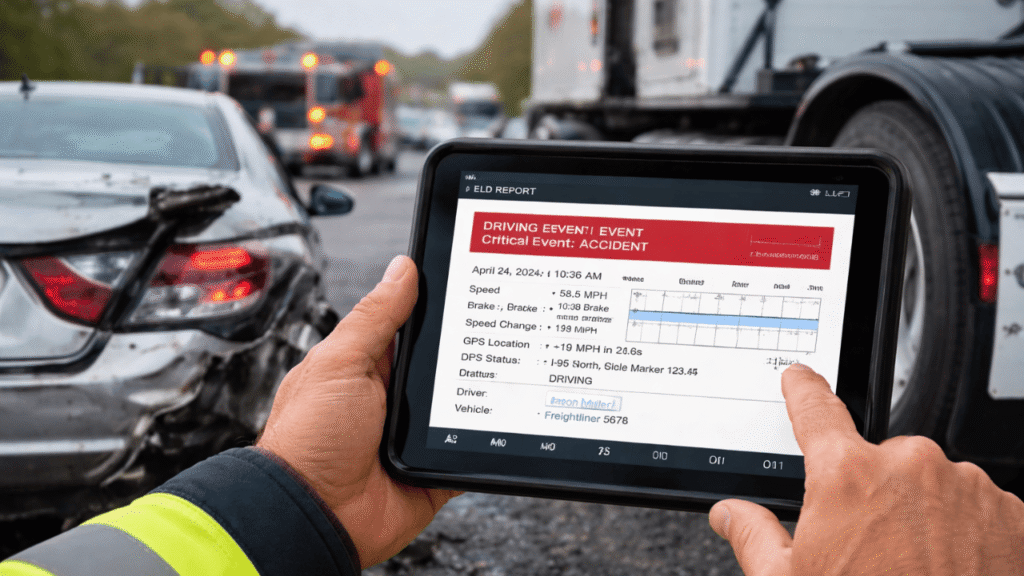
After a serious incident, questions come fast. What happened right before the crash? How long had the driver been on duty? Was the log accurate? This is where ELD data’s role in accident investigations becomes critical.
ELDs don’t tell the whole story on their own, but they do provide a reliable framework, time-stamped, location-based, and difficult to manipulate after the fact. When used correctly, ELD data can clarify facts, reduce speculation, and help carriers respond with confidence rather than scrambling.
Table of Contents
Why ELD Data Matters After a Crash
In the past, paper logs left too much room for interpretation. Today, investigators often start with ELD records to understand hours, movement, and activity leading up to an event. That’s why ELD data’s role in accident investigations has grown, because it provides consistency across drivers and fleets.
For carriers, this data can either support your position or expose gaps in training, planning, or oversight. Knowing how it’s used helps you prepare.
Related Article: What Is an ELD and Why Does It Matters
Crash Timeline
One of the first things investigators build is a crash timeline. ELD data helps establish:
- When the driver went on duty
- How long they had been driving
- When breaks occurred
- Whether any time extensions were used
This timeline is often matched with other sources (such as dispatch records or camera footage) to see whether everything lines up. In many cases, ELD data’s role in accident investigations starts and ends with answering one question: Was the driver operating within legal limits at the time of the crash?
Duty Status Logs
Duty status logs show how a driver categorized their time, driving, on duty but not driving, off duty, or in the sleeper berth. These entries matter because they reveal patterns.
Investigators may look for:
- Long stretches without adequate breaks
- Frequent edits or unusual status changes
- Signs of fatigue risk before the incident
If the logs look clean and consistent, ELD data can actually help protect the driver and carrier by demonstrating compliance.
Location History
ELDs also capture location history, which helps confirm the vehicle’s location at specific times. This is useful when:
- Reconstructing the route
- Verifying delivery or pickup timing
- Matching logs to fuel stops, tolls, or GPS data
Location data doesn’t need to be exact down to the foot to be valuable. Even general positioning can confirm whether the log aligns with real-world movement, reinforcing the role of ELD data in accident investigations.
Log Edits
Edits aren’t automatically a problem, but they are reviewed closely. Log edits show who changed a record, when it was changed, and why.
During an investigation, reviewers often ask:
- Were edits made before or after the crash?
- Were they driver-initiated or carrier-suggested?
- Are the annotations clear and reasonable?
Transparent edits with proper notes support credibility. Sloppy or unexplained changes can raise red flags, which is why good log-audit habits matter long before an incident happens.
Evidence Records
ELD information is rarely reviewed alone. It’s combined with evidence records like:
- Dispatch instructions
- Bills of lading
- Fuel receipts
- Maintenance records
- Driver messages
Together, these sources create a fuller picture. When everything aligns, ELD data’s role in accident investigations shifts from suspicion to confirmation.
How ELD Data Is Used in Accident Investigations
So, how does this actually play out? Typically, investigators:
- Pull ELD records for the days leading up to the crash
- Review duty status, driving time, and breaks
- Compare ELD data with other records and statements
- Look for inconsistencies, patterns, or violations
Understanding how ELD data is used in accident investigations helps fleets respond faster and avoid reactive decision-making during a stressful time.
What ELD Records Show After a Trucking Accident
After an incident, ELD records usually show:
- Driver activity leading up to the crash
- Whether HOS limits were followed
- Where the truck was and when
- Any recent edits or anomalies
Knowing what ELD records show after a trucking accident allows carriers to assess exposure quickly and decide on next steps, legal, operational, or training-related.
Why Preparation Matters Before an Accident Happens
The biggest mistake fleets make is thinking about ELD data only after something goes wrong. Strong daily audits, clear edit policies, and consistent driver coaching all strengthen ELD data’s role in accident investigations, because the records already tell a clean, believable story.
When logs are reviewed regularly, there are fewer surprises, fewer questions, and far less stress if an investigation occurs.
Turn ELD Data Into a Line of Defense
At the end of the day, ELD data’s role in accident investigations isn’t about blame. It’s about clarity. Clean data helps establish facts, protect drivers, and demonstrate that your fleet takes safety and compliance seriously.
The fleets that handle investigations best are the ones that treat ELD data as an everyday management tool, not just something pulled out during emergencies.
Need Help Managing ELD Data and Post-Accident Reviews?
Reach out to us at www.welocity.ca, call 905-901-1601, or email info@welocity.ca if you need any trucking-related services. From ELD log audits to compliance support and post-incident reviews, we’re here to help you stay prepared.