
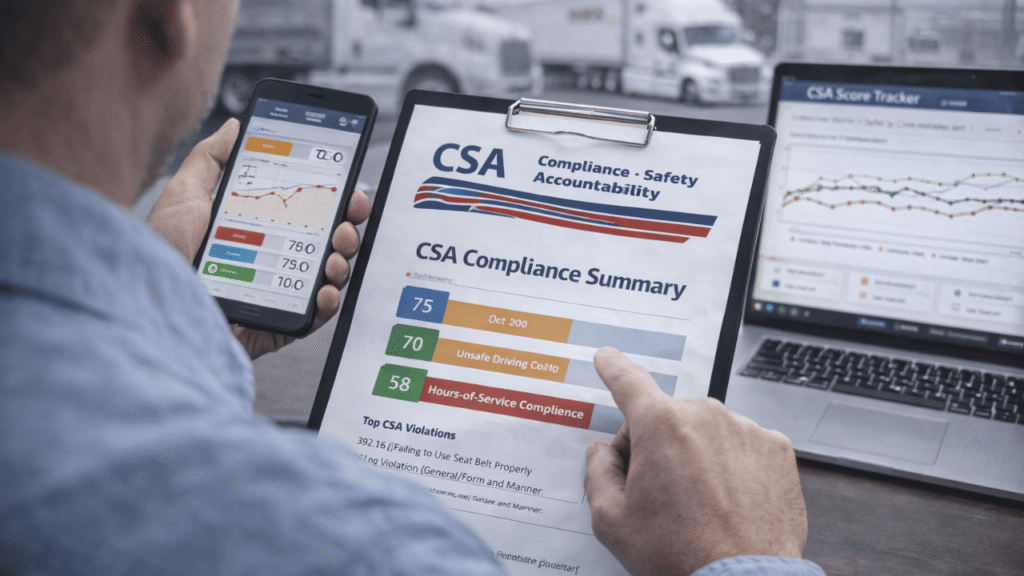
A lot of people say “CSA certification,” but here’s the honest truth: it’s not a certificate you hang on the wall. It’s how safety performance is measured and tracked, and it can absolutely shape your day-to-day operations.
If you manage a fleet, CSA compliance isn’t just about paperwork. It affects inspections, shipper trust, insurance conversations, and how often your company gets extra attention. The more you understand CSA compliance, the easier it gets to protect your drivers, your equipment, and your reputation.
Table of Contents
What CSA Scores Mean for Trucking Companies
CSA stands for Compliance, Safety, Accountability. The system uses safety and inspection data to help flag higher-risk carriers for follow-up. In plain terms, it’s a way to compare your operation to similar carriers based on the data you’re generating on the road.
Most fleets run into CSA for one reason: someone checks your score. It might be a shipper, a broker, an insurer, or your own team trying to understand risk. That’s why CSA compliance needs to live in the real world, driver habits, shop routines, dispatch decisions, not just in a binder.
Related Article: How to Read Your CSA Scores
Stop Chasing Scores—Fix the Patterns Behind Them
Here’s the key idea: your performance is grouped into categories often referred to as BASIC scores. Think of them as buckets of behavior (like maintenance, hours-of-service patterns, driver fitness, and more). The point isn’t to obsess over every number, it’s to find your trouble spots and fix them before they become patterns.
If your fleet keeps seeing the same types of issues, your CSA compliance work should focus on root causes:
- Are drivers rushing because dispatch schedules are unrealistic?
- Are pre-trip inspections getting skipped because everyone’s in a hurry?
- Are repairs being delayed because the shop is overloaded?
When you answer those questions honestly, you can turn CSA compliance into a practical game plan instead of a monthly panic.
How CSA Certification Gets Hurt (Usually Without Anyone Noticing)
Here’s what trips fleets up: the damage usually doesn’t come from one big event. The little things keep happening.
Some common examples are:
- After an inspection, drivers forget to write down problems correctly.
- Small mistakes add up until they become big problems
- Coaching happens once and then goes away until the next issue.
Over time, those habits can make you more likely to get a tougher compliance review and make you feel like you have to “clean things up fast” instead of doing it right.
This is also where the phrase safety rating gets thrown around a lot. While CSA data helps guide enforcement priorities and interventions, fleets should treat CSA performance as a leading indicator: if the data looks messy, it usually means the operation needs tightening.
How To Improve CSA Compliance in Fleet Operations
It’s not hard to get better at following the CSA rules, but you have to do it all the time. Your team will get tired out, and the results will be mixed if you try to fix everything at once. Choose a few habits you can do repeatedly and stick to them.
Here is a fleet-friendly way to do it:
- Do short, focused reviews every week like a scorecard.
Don’t wait for monthly reports. Look over the inspections, problems, and driver notes from the past week.
- Give your players receipts, not lectures.
Tell drivers exactly what the problem is, why it matters, and what “good” looks like. Then check in.
- Use maintenance as a way to stay in compliance.
Before the truck leaves, there is a clean inspection. Make a habit of catching problems early.
- Fix the pressure of scheduling.
If dispatch plans force drivers to make bad choices, your efforts to follow the CSA will never succeed.
- Don’t just look at events; look at trends.
One problem could be random. When problems keep happening, it’s a problem with the system, like training, processes, or accountability.
And yes, hours of service are important here too. Many fleets have problems with tired drivers, decision-making that’s too quick, and logs that don’t match actual movement. So, CSA compliance improves when planners create routes drivers can legally follow.
Where CSA Shows Up in Real Life for Fleets
CSA isn’t just a back-office metric. It shows up at the worst possible moments, like a busy lane when an officer decides to take a closer look. A pattern of roadside violations can create extra stress for drivers and quickly slow operations.
It also shows up in business decisions. Shippers and brokers often prefer carriers that look steady and predictable. Strong CSA compliance supports that story: “We run a safe operation, and our data backs it up.”
Finally, you’ll hear the term FMCSA CSA in conversations with consultants, insurance reps, and safety teams. If your numbers trend in the wrong direction, it’s a signal to tighten your process, not to scramble for a quick fix.
Running a Fleet That Stays Ready
Here’s the mindset shift that helps most: CSA compliance works best as a routine, not a rescue mission. When you review regularly, coach early, and fix the operational causes behind repeat issues, your results improve, and your drivers feel the difference.
Get Your CSA Compliance on Track Without the Guesswork
Reach out to us at welocity.ca, call 905-901-1601, or email info@welocity.ca if you need trucking-related services. Whether it’s compliance training, inspection readiness, or building a better safety process, we have you covered.