
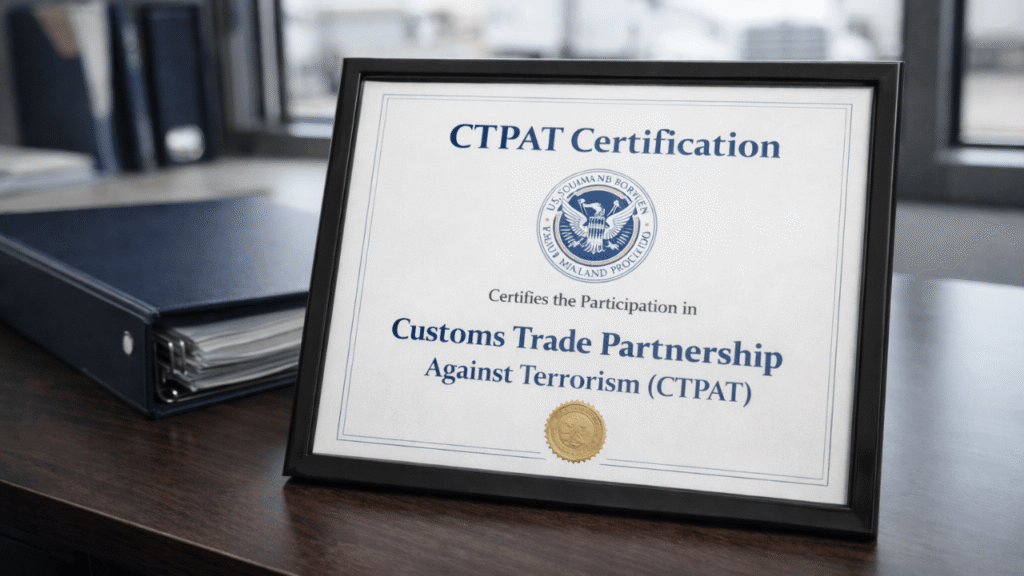
If you run freight across the U.S. border, delays can wreck a clean schedule fast. One extra inspection, one paperwork mismatch, one “random” exam, and suddenly a simple run turns into a costly mess. That’s where CTPAT certification comes in.
At its core, CTPAT certification is about proving you take security seriously, so border agencies can treat your shipments as lower risk. When you do it right, it helps fleets move with fewer surprises, stronger processes, and a better reputation with shippers who care about secure lanes.
Table of Contents
What Is CTPAT Certification in Trucking
So, what is CTPAT certification in trucking? CTPAT (Customs Trade Partnership Against Terrorism) is a voluntary CBP program that partners with private companies to strengthen supply chain security. In plain terms: you agree to meet specific security standards, document what you do, and keep improving it, then CBP recognizes you as a lower-risk partner.
For carriers, CTPAT certification usually means tightening the “people, process, and equipment” side of operations. Think:
- Screening and managing business partners (like subcontractors and service providers)
- Driver and employee vetting and access controls
- Trailer and cargo security procedures (seals, locks, inspections)
- Facility security (yards, gates, cameras, visitor controls)
- Written policies you can actually show during a review or validation
And yes—there’s accountability. You don’t just sign up and forget it. You complete a security profile, follow the minimum security criteria for your role, and keep your program operational in the real world.
How CTPAT Certification Works in Real Life
Here’s a quick, useful summary of how CTPAT certification usually works for carriers:
1. Go over the safety rules for highway carriers.
This is your list of the rules and controls that must be in place.
2. Write down what you do and fill in the gaps.
You fix your seal process if it’s not always the same or if your yard access is loose.
3. Make routines that you can do over and over again.
Fleets win here: they always check trailers, keep seal logs, follow visitor procedures, and take action when something seems off.
4. Keep the standard.
You can’t just get CTPAT certification once and be done with it. It needs regular reviews and updates to stay strong.
This is also where the “soft stuff” comes into play. If your team sees security as just a box to check, it won’t work. But if you make habits that drivers can follow without slowing down, getting CTPAT certification becomes a normal part of doing business.
Benefits of CTPAT for Cross-Border Carriers
Now for the big question: benefits of CTPAT for cross-border carriers, what do you actually get?
The biggest value is speed and predictability. CTPAT partners may see:
- Fewer cargo exams and inspections over time
- Priority handling in some inspection situations
- Faster recovery when borders tighten due to security events
- Better standing with customers who prefer working with a trusted trader mindset
For many fleets, the less obvious wins matter just as much:
- Stronger standard operating procedures across terminals
- Fewer security incidents that turn into claims or customer disputes
- Cleaner processes for cross-border shipping, especially when multiple parties touch the load
And when your internal playbook is solid, border compliance gets simpler, because drivers aren’t guessing, and dispatch isn’t scrambling.
Common Mistakes Fleets Make (And How to Avoid Them)
Even motivated fleets can get tripped up by the same problems:
- Policies that don’t match reality: If the handbook says one thing but the yard does another, consistency falls apart.
- Weak partner controls: Subcontractor gaps can drag your whole program down.
- Training that’s too theoretical: Drivers need “here’s what to do at the yard gate” training, not a slideshow.
A good rule: if a new dispatcher or driver can’t follow your security process on day one, it’s too complicated.
Why CTPAT Certification Is Worth It
CTPAT certification matters because it turns security from “hope nothing happens” into a system you can prove and improve. It helps you protect freight, reduce risk, and support smoother crossings, especially when border conditions get stricter. And in a market where customers care about reliable capacity, CTPAT certification can be a quiet competitive edge.
Need Help Getting Your Cross-Border Operation Ready?
Reach out to us at www.welocity.ca, call 905-901-1601, or email info@welocity.ca if you need any trucking-related services. Whether it is ELD setup, compliance training, or vehicle inspections, we have you covered.