
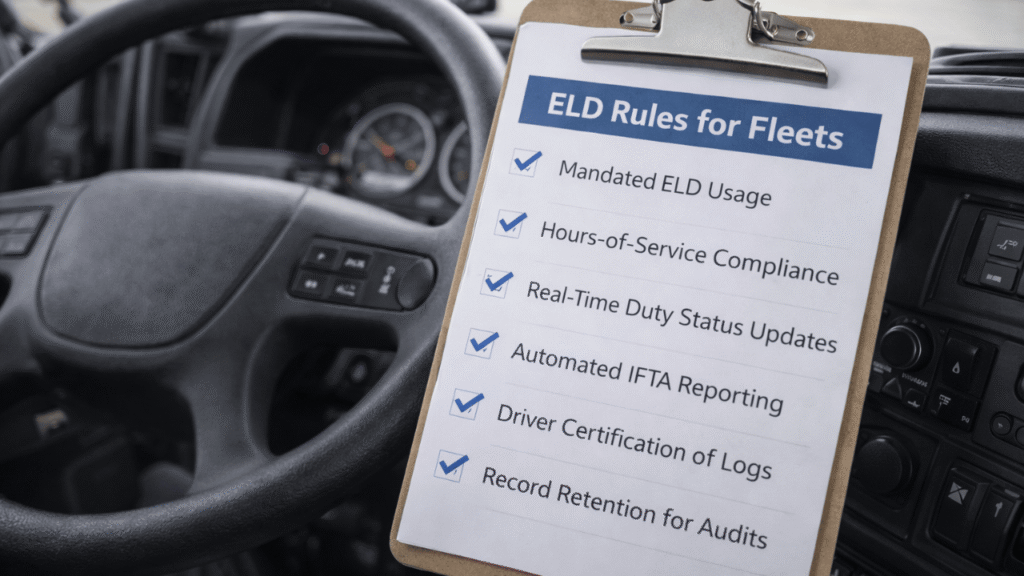
If you run trucks, you’ve felt it: one small logging mistake can snowball into violations, delays, or an uncomfortable conversation with an inspector. That’s why learning the ELD rules for fleets isn’t just “compliance work”—it’s protection for your business.
Here’s the good part: once you understand the core expectations, the ELD rules for fleets become pretty manageable. You don’t need to memorize the entire rulebook. You need a clear checklist, a routine your team actually follows, and a way to handle exceptions without panic.
Table of Contents
FMCSA ELD Requirements for Motor Carriers
The baseline is simple: if your drivers must keep Records of Duty Status (RODS), they are typically subject to the ELD rule. In other words, the requirement applies to most carriers and drivers who must maintain logs.
A few practical “must-dos” come up again and again during enforcement and audits:
- Keep ELD records and supporting documents for six months and maintain a backup copy for that same period.
- Train drivers on data transfer so they can send logs when asked (more on this below).
- Have a plan for malfunctions—drivers should report issues quickly, and the carrier should repair or replace the unit within the allowed timeframe.
If you want the ELD rules for fleets to feel less stressful, treat these as non-negotiables and build your process around them.
ELD Compliance Rules Every Fleet Must Follow
This is where fleets either stay clean, or get tripped up by avoidable habits. The ELD rules for fleets aren’t only about having a device installed. They’re about using it correctly, consistently, and in a way that tells a believable story of the day.
Here are the habits that keep you out of trouble:
- Review logs weekly. Don’t wait until month-end. Small issues become big patterns fast.
- Fix unassigned driving quickly. It’s one of the easiest ways to invite questions.
- Document edits properly. Edits happen, but they should make sense and include notes.
- Match dispatch to log reality. If a load moved, the log should line up with that trip.
- Store reports by month and quarter. You’ll thank yourself later.
This is where HOS compliance lives in real life. You can have the best ELD in the world, but if you don’t review and coach consistently, you’ll still see preventable issues.
Who’s Exempt and When It Matters
Let’s talk about exemptions, because this is where a lot of confusion starts. Some drivers aren’t required to use an ELD even if they still must follow hours-of-service rules.
Common exemptions include:
- Short-haul drivers who qualify to use timecards instead of RODS
- Driveaway-towaway operations
- Older vehicles (generally those manufactured before model year 2000)
Also, remember the big picture: the ELD mandate has been in effect for years, and “older” grandfathered logging setups have phased out. If you’re unsure whether a specific truck or operation qualifies, don’t guess. Misusing an exemption is one of the fastest ways to create risk under FMCSA regulations.
What Happens at Roadside and How to Avoid a Bad Day
The goal of roadside inspections is simple: the officer wants to see your HOS information and might ask for an electronic transfer from the ELD.
The best thing you can do is simple (and surprisingly uncommon): make sure that every driver can transfer without having to call three people. A quick “show me you can do it” drill during onboarding saves time, reduces stress, and prevents problems later.
Some simple habits you can do on the road also help:
- Keep the instructions and information you need for the ELD in the cab.
- Make sure the driver knows where to find the current day and the days before it.
- Teach drivers to stay calm, speak clearly, and follow the steps for inspection.
Keeping the ELD Rules for Fleets Simple
Here’s the truth: most fleets don’t get burned because they “don’t care.” They get burned because they don’t build a routine. If you want the ELD rules for fleets to work for you, keep it simple:
- Audit logs weekly and coach early
- Keep clean records for six months (plus backups)
- Train drivers on transfers and malfunction steps
- Use exemptions carefully and document why they apply
Do that, and the ELD rules for fleets stop feeling like a trap and start feeling like a system you control.
Keep Your Fleet Audit-Ready Without the Stress
The smartest fleets treat ELD rules like maintenance: regular checks, quick fixes, and clear documentation. When you follow a simple routine, you reduce surprises, cut down on violations, and walk into audits with confidence.
Need Help Tightening Up Your ELD Compliance?
Reach out to us at welocity.ca, call 905-901-1601, or email info@welocity.ca if you need trucking-related services. Whether it’s ELD setup, compliance training, or audit-ready process support, we have you covered.