
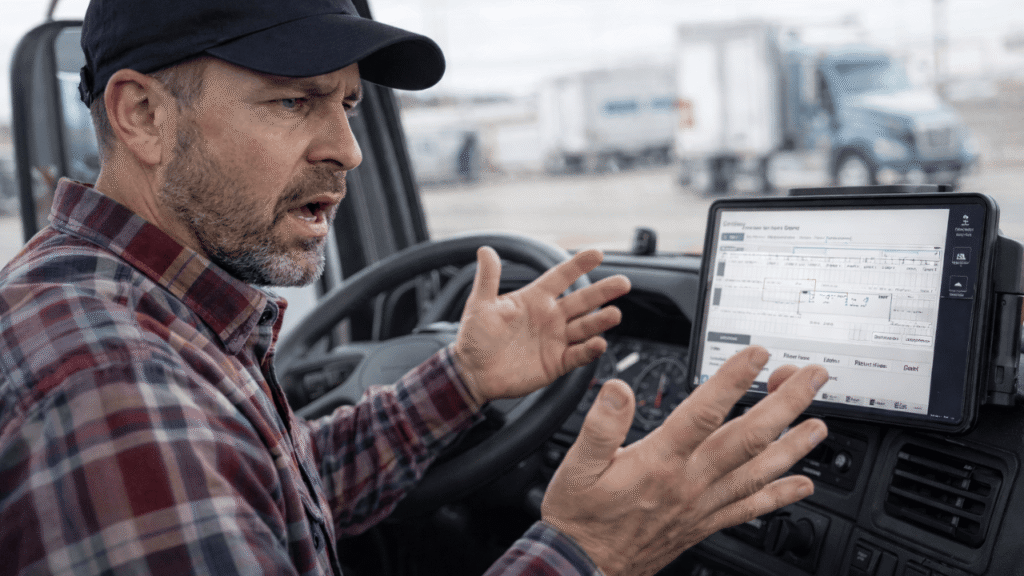
Drivers who complain about ELD usually don’t say they “hate compliance.” People are upset about lost time, hard-to-understand screens, surprise edits, and the fear of getting in trouble for something the device did. You should treat driver complaints about ELD like an operations problem, not a personality problem, if you want fewer fights and cleaner logs.
Table of Contents
Why Driver Complaints About ELD Keep Coming Up
Most of the complaints drivers have about ELD fit into a few common categories:
- Time pressure: Logging feels like “extra work” at the worst times, like when you’re fueling, dropping off, or waiting at the dock.
- Gaps in confidence: Drivers are afraid they will tap the wrong status or miss a prompt during an inspection.
- Different expectations: One dispatcher tells the driver to “just drive,” while another tells them to “fix your log first.”
- Tech problems: Pairing, syncing, and power problems can make things stressful when the clock is ticking.
When a device breaks down, drivers usually have to tell the carrier right away and use paper logs when the device can’t accurately record hours. That’s why fleets need a clear plan for when things go wrong and how to fix them quickly.
How to Handle Driver Resistance to ELDs
Start by acknowledging the real pain points. Then lead with a simple message: “We’re going to make this easier, faster, and fair.”
Here’s what works in the field:
- Explain the “why” in driver language. Focus on protecting their CDL, preventing HOS errors, and avoiding inspection headaches—not corporate buzzwords.
- Standardize the rules of the road. Create one clear policy for edits, yard moves, personal conveyance, and unassigned driving. Inconsistent instructions fuel driver complaints about ELD fast.
- Pick a few driver champions. Ask respected drivers to test workflows and share what’s actually helpful. Their feedback carries more weight than any memo.
- Measure friction, not attitude. Track the top reasons for support calls and log corrections. When you fix the process, the tone improves on its own.
Fix the Root Causes: Training, Workflow, and Device Setup
If you want driver complaints about ELD to drop, focus on the basics that affect every trip.
Make training practical (not classroom-style)
Use driver training that mirrors real stops: pre-trip, shipper check-in, fueling, roadside inspection, and end-of-day recap. Keep it short, repeatable, and device-specific.
Treat rollout like an operations change
Good change management means you don’t just “announce” ELD expectations, you coach them. Share a one-page cheat sheet, set a two-week grace period for honest mistakes, and hold consistent coaching sessions.
Reduce confusion on the screen
Many drivers point to usability issues: tiny buttons, unclear prompts, and too many steps to certify logs. If your vendor allows it, simplify defaults (such as automatic reminders and clean-duty-status shortcuts) and remove unnecessary prompts.
Create a real support path
Build a tight ELD troubleshooting process:
- Driver reports the issue (what happened, when, truck/unit number).
- Dispatch confirms if the problem affects HOS capture.
- A trained contact handles the vendor ticket and documents the next steps.
- Driver gets a clear instruction: “Do X now, and here’s what to do if it fails again.”
When tech fails, carriers should be ready to support paper logs and act fast so drivers aren’t stuck guessing on the side of the road.
Tips to Reduce ELD Frustration for Drivers
Use these quick wins to calm things down without slowing the operation:
- Cut log edits at the source: Fix dispatch messages that push drivers into impossible schedules.
- Do weekly “5-minute log checks”: a quick review prevents big cleanup later.
- Keep devices updated and powered: A surprising number of complaints stem from outdated app versions or loose connections.
- Set expectations for malfunctions: Drivers should know exactly what to do if the unit won’t sync or shows a diagnostic alert.
- Ask for feedback at the right time: at the end of the shift, not mid-route.
Over time, this is how you earn driver buy-in, not by forcing compliance, but by removing daily friction so the device feels predictable.
Making ELDs Work Better for Everyone
You won’t eliminate driver complaints about ELD overnight, but you can shrink them quickly when you focus on fairness, consistency, and fast support. Tighten workflows, train for real-life scenarios, and treat technical problems like the urgent operations issues they are. When drivers feel supported, driver complaints about ELDs naturally lead to fewer errors, smoother inspections, and less stress across the fleet.
Need Help Simplifying ELDs for Your Drivers?
Reach out to us at www.welocity.ca, call 905-901-1601, or email info@welocity.ca if you need trucking-related services. Whether it is ELD setup, compliance training, or vehicle inspections, we have you covered.