
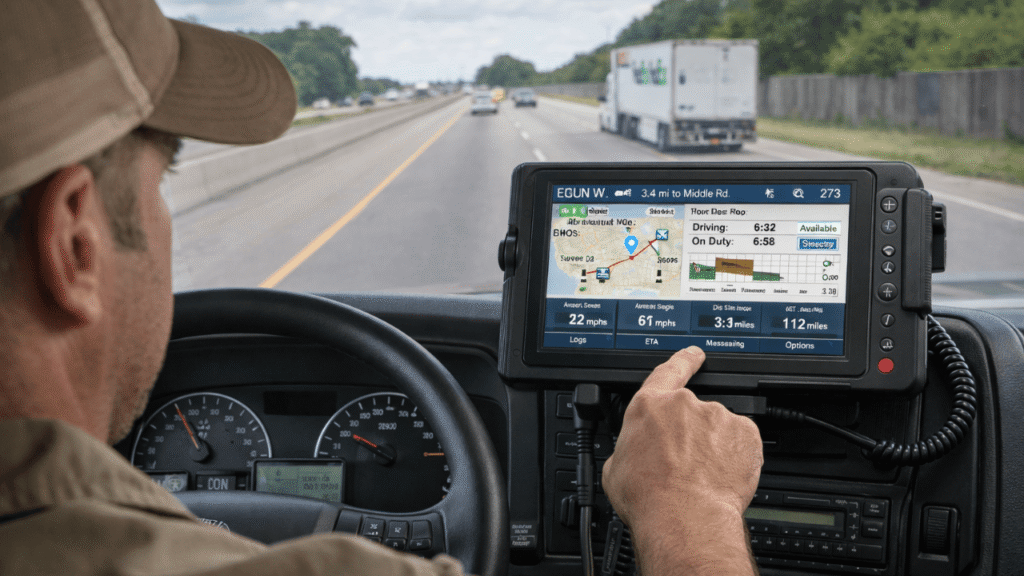
Every day, most fleets already gather a lot of data. The problem isn’t getting to the information; it’s turning it into actions that drivers and managers can use. That’s where ELD safety metrics come in.
When you keep an eye on the right numbers, you can see when someone is getting tired before it happens, identify patterns that lead to violations, and give real-life examples rather than opinions when you coach. To put it another way, ELD safety metrics help you go from “fixing a problem” to “stopping a problem.”
And no, you don’t need a big team of analysts. You only need a useful scoreboard and a regular schedule.
Table of Contents
How to Use ELD Data to Improve Safety
Think like a dispatcher and a coach at the same time: “What does the pressure look like in the logs, and where do drivers get squeezed?”
Here’s an easy way to use ELD safety metrics to make your program:
1. Choose 5 to 7 metrics to look at each week.
You won’t do anything if you keep track of 30 things. Pick a short list that includes tiredness, driving too fast, and schedule problems.
2. Set limits for “green/yellow/red”
Drivers don’t need to be told what to do; they need to understand. “Two or more HOS close calls in a week = yellow,” for example.
3. Look at trends by lane and customer, not just by driver.
Your logs will show if one receiver always makes you leave late. It might not be a write-up that fixes the problem, but appointment windows.
4. Coach with context, not blame
A driver who runs tight hours on one route might have to deal with chronic detention. Your ELD safety metrics should help you find solutions, not blame others.
The Core ELD Safety Metrics Every Fleet Should Track
You can tailor these to your operation, but most fleets get quick wins by focusing on a few categories.
1) HOS Risk Metrics (Fatigue Pressure)
These are the most important ELD safety metrics because they show when your schedule makes it hard for drivers to get around.
* Frequency of “near violation” days (close to max drive/on-duty time)
* Breaks that were missed or cut short* Driving late in the day (too many miles at the end of shifts)
* Recap dependence (always “just barely legal” planning)
What it means: If your plan depends on perfect days, you’re only one delay away from trouble.
Related Article: How to Manage Hours of Service (HOS) Rules Efficiently
2) Unplanned Time Metrics (Where Plans Fall Apart)
These numbers don’t just reflect drivers, they reflect operations.
- Excessive on-duty, not driving time at specific shippers/receivers
- Unexpected stop patterns (extra stops mid-route)
- Long idle blocks that aren’t weather-related
What it tells you: where your workflow causes stress, which often shows up later as rushed driving or skipped rest.
3) Edit and Annotation Patterns (Log Hygiene)
Clean logs don’t just help during inspections, they help you trust your own data.
- Number of log edits per driver per week
- Missing notes on exceptions
- Repeated “same issue” annotations
What it tells you: whether training is sticking and whether drivers understand what “good logging” looks like. Strong ELD safety metrics depend on clean inputs.
4) Route Realism Metrics (The “Can We Actually Do This?” Test)
This is where safety metrics for ELDs become a planning tool.
* Planned drive time by lane vs. actual drive time* Doing things on time without cutting corners
* The percentage of loads that need “perfect timing” to stay legal
What it tells you: if you need to change customers, routes, or your own planning rules.
Turning Metrics Into a Weekly Coaching Routine
Numbers only matter if they change behavior. Here’s a routine that works without turning into a “big meeting” every week:
- Monday: Pull the week’s ELD safety metrics dashboard (one page)
- Tuesday: Identify the top 3 recurring causes (lane, customer, or terminal)
- Wednesday–Friday: Do short coaching touches—10 minutes, one topic, one example
- End of week: Track one improvement goal (example: fewer tight-hour dispatches)
Keep it simple. When drivers see that the same rules apply to everyone, and that the company fixes operational problems too, buy-in goes way up.
Also, don’t forget the fleet-level view. ELD safety score metrics for fleets work best when you compare terminals, lanes, and time periods, not just individual drivers.
Make the Data Work for You
If you want fewer close calls, fewer violations, and calmer days in the office, build your program around ELD safety metrics that point to real causes: unrealistic schedules, chronic detention, and tight hours that push drivers into risky decisions. Track a small set, review it weekly, and coach with facts. Do that consistently, and ELD safety metrics stop being “reports” and start becoming results.
Want Help Building a Practical Safety Scoreboard From ELD Logs?
Reach out to us at www.welocity.ca, call 905-901-1601, or email info@welocity.ca if you need any trucking-related services. Whether it is ELD setup, compliance training, or vehicle inspections, we have you covered.