
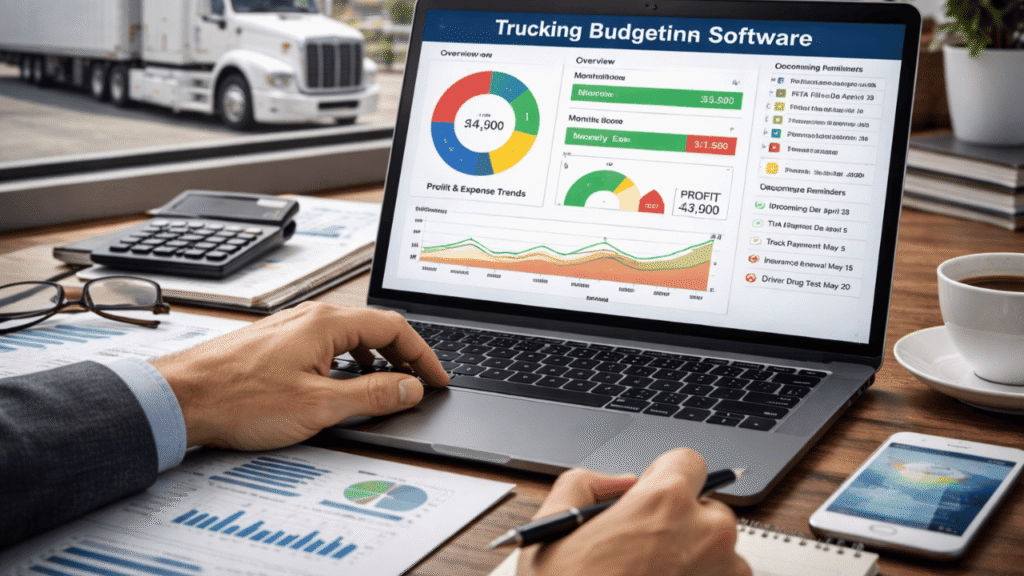
Let’s be honest: most trucking companies don’t fail because they “don’t work hard enough.” They have a hard time because the numbers get mixed up. Payments are late, bills come due all at once, and it’s hard to know if a load was really profitable until the end of the month.
This is where trucking financial tools come in. With the right setup, you can keep track of your costs, improve your cash flow, and make decisions with confidence. This guide explains the most useful tools in plain language and shows how they can be used in real fleet financial management.
Table of Contents
Why Trucking Financial Tools Matter More Than Ever
Trucking is a business that needs a lot of money. None of these things, fuel, repairs, tires, or insurance, waits for customers to pay.
You can do the following with good fleet accounting tools and basic reporting dashboards:
- Look at profit by lane, truck, or customer
- Catch costs that are going up early
- Predict cash shortages before they happen
- Speed up billing so you get your money faster.
- Stop making guesses and start running things
These tools can save you hours and protect your margins, even if you only have a few trucks.
Cost Per Mile Calculator (A Way to Check Your Profits)
If you can only change one money habit, make it this: keep track of how much it costs per mile.
A cost per mile calculator can help you figure out:
- How much does it really cost to run each truck?
- Are we charging enough for loads?
- Which lanes or units are losing money?
What to put in the cost per mile
To make sure it’s right, add:
- Fuel and DEF
- Pay for drivers
- Fixing and keeping up
- Tires
- Coverage
- Fees and permits
- Fixed costs for the office, software, and administration
Once you know how much it costs to move a load, you can stop taking loads that “look busy” but actually lose money.
Budgeting Software: Make Your Spending Predictable
Budgeting software sounds like a snooze… until you have three breakdowns in one month and get a bill for insurance at the same time.
A good budget helps you plan for:
- Planned tire changes and maintenance
- Renewals of insurance
- Costs of permits and following the rules
- Times of year when business is slow or customers change
- Upgrading equipment
A simple tip for making a budget that works
Make two buckets:
- Monthly costs that don’t change (rent, insurance, payments, software)
- Costs that change (gas, repairs, tolls, and extras)
You can see what’s really changing from month to month, which makes managing your fleet’s finances much easier.
Related Article: Trucking Compliance Costs: How to Budget Without Getting Blindsided
Tracking Cash Flow: Stay Ahead of “Surprise” Shortages
Making money on paper doesn’t always mean you have money in the bank. That’s why keeping track of cash flow is so important in trucking.
Tools for cash flow help you keep an eye on:
- What will happen this week
- What bills are coming up next* Who are the slow pay customers?
- If you can safely add more drivers or trucks
If you’ve ever had a “good month” and still felt broke, cash flow tracking is the missing piece.
Manage your expenses: Don’t let small leaks cost you money.
Expense management tools help you keep track of and organize your spending on things like gas, repairs, tolls, and driver-related costs. They are very useful for keeping track of costs by truck or driver.
What expense management should catch
- Fuel purchases outside policy
- A certain unit needs repairs more often than usual
- Toll costs rising on certain routes
- Reimbursements that aren’t documented
- Duplicate charges
A little visibility goes a long way here.
Invoicing Tools: Get Paid Faster (and with Fewer Headaches)
In trucking, paperwork delays turn into payment delays. That’s why invoicing tools matter.
A solid invoicing setup should:
- Generate invoices quickly (same day if possible)
- Attach POD, rate con, and any receipts
- Track invoice status (sent, viewed, paid, overdue)
- Send reminders automatically
The faster you invoice, the faster your cash flow stabilizes. It’s one of the simplest wins in fleet financial management.
Reporting Dashboards: Make the Numbers Easy to See
Reporting dashboards turn your financial data into something you can actually use, without digging through spreadsheets.
Useful dashboard metrics for fleets
- Cost per mile (fleet and by unit)
- Revenue per mile by customer/lane
- Fuel spend trend (weekly/monthly)
- Maintenance costs and downtime
- Accounts receivable aging (who owes you what)
- Profit by truck or driver (if your data supports it)
The point isn’t to stare at charts all day. It’s to spot problems early, before they turn expensive.
Fleet Accounting Tools: What to Look For
Fleet accounting tools are usually your “home base” where everything connects: banking, payroll, invoicing, expenses, and reporting.
When choosing tools, look for:
- Easy integration with your TMS (if you use one)
- Clean expense categories and job costing
- Simple invoicing and document attachment
- Real cash flow reporting
- Role-based access for staff (dispatch vs. accounting)
The best tool is the one your team will actually use consistently.
Quick Setup Plan (So This Doesn’t Become a Big Project)
Here’s a simple way to roll this out without overwhelming everyone:
- Week 1: Start tracking cost per mile with a basic cost per mile calculator
- Week 2: Add cash flow tracking (weekly in/out + AR list)
- Week 3: Tighten invoicing tools and document flow (POD → invoice same day)
- Week 4: Build a lightweight reporting dashboard with 5–7 key metrics
Small steps, done consistently, beat a complicated “perfect system” that nobody maintains.
Make the Money Side of Trucking Feel Less Stressful
The best trucking financial tools don’t just “track numbers.” They help you run a calmer business. When you’ve got a cost per mile calculator, cash flow tracking, solid expense management, and invoicing tools that move fast, you stop guessing, and fleet financial management gets a whole lot easier. Add simple reporting dashboards and dependable fleet accounting tools, and you’ll be able to spot issues early and make smarter decisions with less stress.
Get Your Fleet Systems Running Smoother
Need help setting up workflows that support better fleet financial management, like faster paperwork, ELD setup, compliance training, or vehicle inspections? Reach out to us at www.welocity.ca, call 905-901-1601, or email info@welocity.ca if you need any trucking-related services. Whether it’s ELD setup, compliance training, or vehicle inspections, we have you covered.