
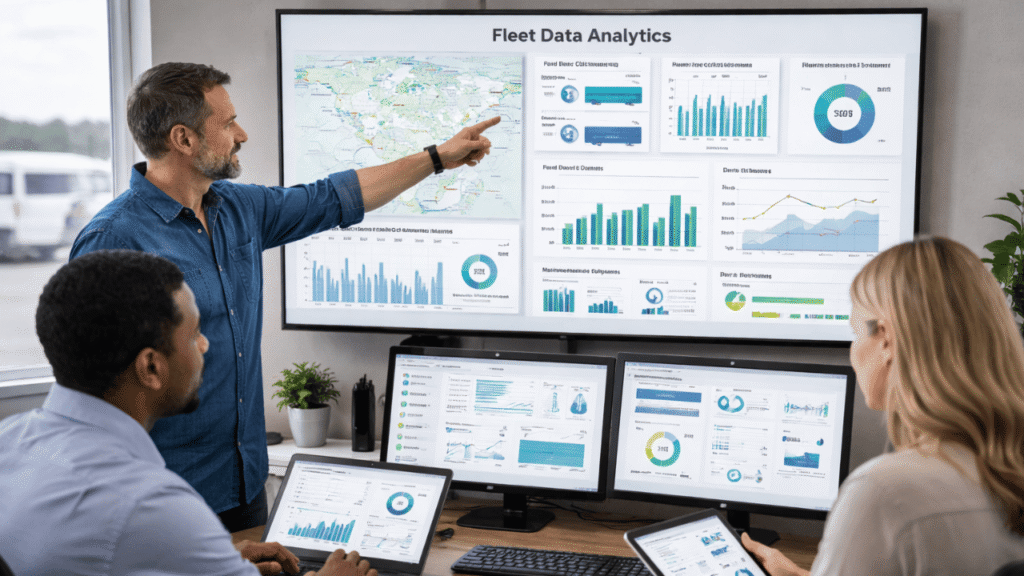
Fleet data management is now a must for carriers who want to stay profitable. When you use telematics data, driver scorecards, and KPI dashboards together, you get clear analytics that reveal where money is lost, like fuel, idle time, and maintenance, and where things are improving. Tracking fleet performance also helps you coach drivers, improve routes, and plan maintenance before issues arise.
Table of Contents
What Fleet Data Management Really Means (and Why It Matters)
Fleet data management is about collecting, organizing, and using information from your fleet. This usually comes from ELDs, GPS, telematics devices, fuel cards, and maintenance logs.
When done well, it helps you answer questions like:
- Which routes are consistently delayed and why?
- Which trucks are driving up maintenance costs?
- Which driving behaviors increase fuel burn and risk?
- Are we meeting service targets without overspending?
The goal is simple: better decisions, faster.
Trucking Data Analytics: The Most Useful Data Sources
You don’t need more data. What matters is having the right data in a format you can actually use.
Telematics data that moves the needle
Telematics data often includes:
- Speeding, harsh braking, and rapid acceleration
- Idle time and engine hours
- GPS location history and dwell time
- Fault codes and engine diagnostics
This steady, automated data is the foundation of tracking fleet performance.
Operational data worth connecting
Combine telematics with:
- Dispatch and TMS data (pickup/drop times, detention)
- Fuel purchases (by unit, driver, lane)
- Maintenance history (parts, labor, downtime)
- Safety events (violations, incidents, claims)
Trucking data analytics is most effective when your systems are connected and share information with KPI Dashboards.
Start with a small set of KPIs that most fleets care about:
- Cost per mile (fuel + maintenance + other)
- MPG / L/100km (by unit, driver, route)
- Idle percentage (and idle hours)
- On-time performance
- Safety events per 10,000 miles/km
- Preventive maintenance compliance
Once these KPIs are steady, you can add more detailed metrics, like lane-level route efficiency and customer service KPIs.
Route efficiency metrics that expose hidden waste
Route efficiency is about more than just distance. You should also track:
- Planned vs. actual miles/km
- Stop time and dwell time
- Detention frequency by shipper/receiver
- Average speed by segment (traffic patterns)
- Empty miles / deadhead %
For example, if you find a receiver who often causes detention, you can adjust appointment times or pricing to solve the problem.
Driver Scorecards That Improve Safety (Without Demoralizing Drivers)
Driver scorecards work best when they are fair, clear, and focused on coaching—not as ‘gotcha’ tools.
What to include in driver scorecards
Keep it behavior-based and within a driver’s control:
- Speeding over threshold (e.g., 10+ over)
- Harsh braking and aggressive acceleration
- Seatbelt compliance (if available)
- Idle time
- Following distance events (if equipped)
Coaching tips that actually stick
- Begin by comparing each driver to their own past performance, not just to team averages.
- Recognize improvements publicly
- Use short weekly check-ins with 1–2 focus behaviors
- Tie goals toConnect goals to results that matter to drivers, such as less stress, fewer incidents, and smoother days.
Maintenance Insights That Cut Costs Fast
Fuel and maintenance insights usually give you the quickest return on investment.
Fast fuel wins
- Set clear targets and use exception reports to reduce idle time.
- Flag low tire pressure patterns (fuel + safety impact)
- Identify “fuel outliers” by truck, driver, lane, or speed profile
- Keep an eye out for unauthorized purchases or fueling that doesn’t follow policy.
Smarter maintenance planning
Fleet data management helps you shift from reacting to problems to planning ahead:
- Schedule PM based on engine hours + mileage, not just calendar days
- Use fault codes to prioritize shop time
- Track downtime per unit to spot chronic problem vehicles
- Look at how often parts need repair to help you decide whether to repair or replace them.
Related Article: Fuel Efficiency Training for Truck Drivers
Implementation Checklist: Getting Started in 30 Days
- Week 1: Define 5–7 KPIs and set baseline numbers
- Week 2: Clean data sources (unit IDs, driver IDs, timestamps)
- Week 3: Launch KPI dashboards + simple driver scorecards
- Week 4: Run a weekly review: exceptions, coaching, and route fixes
Stay consistent. Small improvements each week work better than trying to do everything at once.
Turning Fleet Data into Better Decisions
Fleet data management is most effective when it’s part of your daily routine, like smarter dispatching, regular driver coaching, and proactive maintenance. Trucking data analytics lets you turn telematics data into driver scorecards, route efficiency metrics, fuel and maintenance insights, and KPI dashboards that keep your team on the same page. Over time, tracking fleet performance becomes less about reacting to problems and more about building a predictable, efficient operation.
Get Your Fleet Data Working for You
Need help improving your fleet data management or building KPI dashboards that get real results? Contact us at www.welocity.ca, call 905-901-1601, or email info@welocity.ca for trucking services like ELD setup, compliance training, and vehicle inspections. If you want to improve fleet performance tracking or need better trucking data analytics, we’re here to help.