
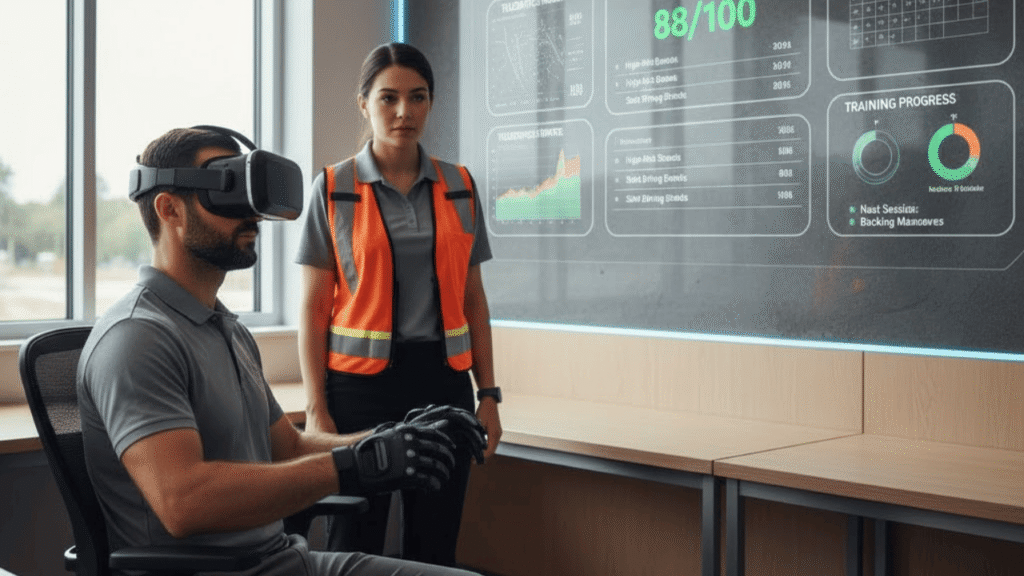
The biggest 2026 trucking driver training trends have one thing in common: fleets are moving from “training events” to always-on, data-driven training programs. Instead of retraining everyone the same way, fleets are using real-world performance data to deliver the right coaching at the right time, then proving it worked.
Table of Contents
Top 6 2026 Driver Training Trends
1) AI coaching for drivers becomes everyday coaching
AI is shifting from “interesting add-on” to practical coaching help, especially via computer vision dashcams and in-cab alerts. Fleets are increasingly using AI to highlight risky patterns and support more consistent coaching conversations.
How it shows up in training:
- Short coaching sessions tied to specific events (speeding, distraction, close following)
- More objective review using video context (less guesswork)
- Faster feedback loops, so drivers correct habits sooner
2) Predictive safety analytics replaces “react after a crash”
In 2026, more fleets are using predictive safety analytics to identify who is most at risk before a serious incident. Think risk scoring that blends behaviors, exposure, and trends, then triggers coaching and training automatically.
Practical example: A driver’s harsh braking rate is climbing week-over-week. Instead of waiting for an accident, the system assigns a following-distance micro-module and schedules a coaching check-in.
3) VR simulation training expands beyond “new driver” use cases
VR simulation training is growing because it lets fleets practice high-risk scenarios safely, winter conditions, tight urban turns, emergency braking, backing, and hazard recognition, without burning fuel or risking equipment.
A Canadian pilot supported by the Future Skills Centre found VR training simulators showed promise for skills enhancement, recruitment, and training outcomes in trucking contexts.
Where VR shines in 2026:
- Onboarding confidence (especially for nervous or inexperienced hires)
- Standardized practice for rare-but-critical events
- Training consistency across terminals
Related Article: VR Driver Training: The Future of Driver Training
4) Microlearning for fleets becomes the default reinforcement
Long courses still matter, but fleets are leaning into microlearning for fleets, short, focused lessons (3–10 minutes) delivered on mobile, often assigned after a specific issue shows up.
Many safety platforms now position microlearning as a way to improve retention and reinforce safe habits “in the flow of work,” rather than once a year.
Best practice: Pair microlearning with a coaching scorecard so drivers know exactly what “good” looks like next shift.
5) Telematics-based coaching + LMS for fleet training finally connect
A major trend is integration: telematics identifies the issue, the LMS assigns the right module, and coaching confirms improvement.
Telematics providers continue emphasizing the value of turning vehicle data into safety and efficiency actions (not just reports).
What this enables:
- Automatic training assignment based on real behavior
- Consistent documentation for audits and internal standards
- Easier measurement of training impact over 30/60/90 days
6) ELD training integration becomes more structured (and more important)
ELD confusion creates compliance risk, inspection stress, and admin time. In 2026, more fleets are formalizing ELD training integration with checklists, scenario-based practice, and refresher bursts.
FMCSA provides specific carrier-driver ELD training materials and an ELD training checklist that outlines what drivers and staff must be able to do.
Related Article: The Future of Trucking Training Technologies
How to Adopt These Trends Without Overwhelming Drivers
A simple rollout plan:
- Start with 2–3 target behaviors (speeding, following distance, distraction)
- Build a coaching cadence (weekly for high-risk drivers, monthly for everyone else)
- Automate microlearning through your LMS when thresholds are hit (then recheck in 30 days)
This keeps the program focused, fair, and measurable.
KPIs That Prove Training Works in 2026
To measure success, track both leading and lagging indicators:
- Leading: speeding rate, harsh events per 1,000 miles, distraction flags, coaching completion
- Lagging: preventable incidents, claims frequency/severity, inspection pass rate, recurring log violations
What to Do Next With 2026 Trucking Driver Training Trends
The fleets winning in 2026 won’t be the ones with the longest courses, they’ll be the ones that connect AI coaching for drivers, microlearning, VR simulation training, and predictive safety analytics into one repeatable system. Start small, measure improvements, and scale what works.
Make Your Training + Tech Stack Work Together
Need help building a technology-enabled training program, integrating ELD training, or setting up coaching scorecards that improve safety fast? Reach out to us at www.welocity.ca, call 905-901-1601, or email info@welocity.ca. Whether it’s ELD setup, compliance training, or vehicle inspections, we have you covered.