
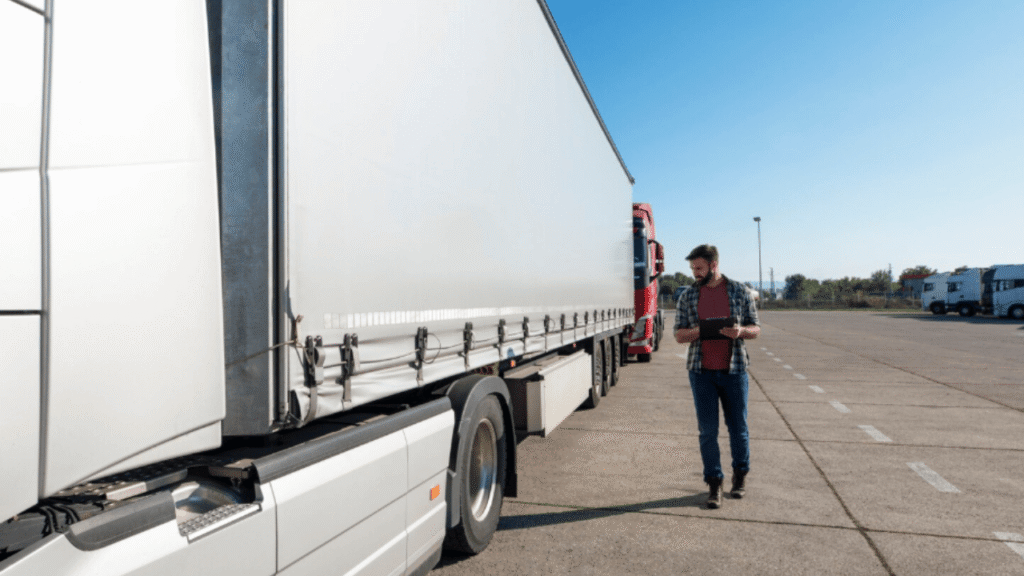
The FMCSA is the main federal agency that oversees safety and commercial registration for motor carriers. That means new companies must follow federal rules on registration, insurance, and safety records before they start hauling. Knowing which trucking business licenses you need early helps you avoid delays and costly mistakes.
Table of Contents
Trucking Business Licenses Requirements to Start a Business
These are the core licenses every for-hire carrier needs before hauling a single load.
Commercial Driver’s License (CDL)
Every driver operating a commercial motor vehicle (CMV) must hold a valid CDL issued by their home state. You cannot have a CDL from more than one state; it’s illegal. If your drivers will handle special cargo or vehicle types, they’ll also need endorsements added to their CDL:
- H endorsement — hazardous materials
- T endorsement — double/triple trailers
- N endorsement — tank vehicles
- P endorsement — passenger vehicles
2026 Update: The FMCSA finalized a rule in February 2026 that tightened requirements for non-domiciled CDLs (issued to foreign-domiciled drivers). Eligibility is now limited to H-2A, H-2B, and E-2 visa holders. Employment Authorization Documents (EADs) are no longer accepted. States must verify immigration status through the federal SAVE system before issuing any non-domiciled CDL. Apply through your state’s Department of Motor Vehicles (DMV). FMCSA does not issue CDLs directly.
Motor Carrier Authority (MC Number)
An MC number is usually needed for for-hire interstate carriers that transport federally regulated goods owned by others or carry passengers for compensation. This is your carrier authority, which tells the FMCSA what kinds of operations and cargo your company is allowed to handle.
FMCSA operating authority is often identified as an MC, FF, or MX number, depending on the type of authority granted. A company may need to obtain multiple operating authorities depending on its planned business operations. The type of authority also dictates the level of insurance the company must maintain.
Important 2026 Update: FMCSA is phasing in its new MOTUS registration system. Phase 2 of MOTUS, which includes motor carriers, brokers, and freight forwarders, is expected in mid-to-late 2026. Users will create accounts, complete business verification, and begin filing through the system. Check fmcsa.dot.gov for the latest portal requirements before applying.
U.S. DOT Number
A USDOT number is a unique identifier issued by FMCSA and used to collect and monitor a company’s safety information, including inspections, compliance reviews, crash investigations, and audits. Any CMV used in interstate commerce with a GVWR/GCWR of 10,001 lbs or more requires a USDOT number. Your DOT number must appear on both sides of your vehicle.
Apply for free through FMCSA’s Unified Registration System (URS). Processing typically takes 20–25 business days for new applicants.
Insurance Requirements
Your Operating Authority won’t be activated until your insurer files proof of coverage directly with the FMCSA. Minimum federal coverage ranges from $750,000 to $5 million, depending on the type of freight: general freight, household goods, hazardous materials, or passenger service.
Your insurer must electronically file a BMC-91X (auto liability certificate) with the FMCSA. If you haul hazmat, an MCS-90 endorsement is also required. A lapse of even one day automatically suspends your operating authority.
Additional Permits
Once your core authority is in place, you’ll need these additional registrations depending on how and where you operate.
Unified Carrier Registration (UCR)
Unified Carrier Registration is an annual registration used by many interstate carriers, brokers, and freight forwarders. If your operation falls under UCR, you must register and pay yearly.
Starting January 1, 2026, companies that lack UCR compliance may face citations, fines, and penalties imposed by individual states and the DOT. Non-compliant carriers will also be unable to renew truck registrations or IFTA licenses. UCR fees are based on fleet size and renew annually at ucr.gov.
International Fuel Tax Agreement (IFTA) Permit
IFTA is a shared policy among U.S. states and Canadian provinces that streamlines the payment of fuel taxes across jurisdictions. If you operate vehicles weighing more than 26,000 pounds or that have three or more axles and cross state lines, you are required to have an IFTA license. You file quarterly fuel tax reports with your base state, and the funds are distributed to each jurisdiction based on miles driven. Apply through your state’s DOT or DMV; setup costs typically range from $10 to $50.
International Registration Plan (IRP) License Plate
IRP is an apportioned registration system that lets interstate fleets run under one plate and a cab card issued by their base state. It is commonly used for heavier commercial vehicles that travel across state lines. Apply through your base state’s DMV. Initial IRP registration typically costs $500–$2,000, depending on weight and projected mileage.
Heavy Highway Use Tax Return (Form 2290)
If your highway motor vehicle has a taxable gross weight of 55,000 pounds or more, you generally must file Form 2290 and pay the heavy highway use tax. This tax is due by August 31 each year, and proof of payment is required to register your truck at the DMV. The annual tax ranges from $100 to $550
FMCSA Hazardous Materials Safety Permit (if needed)
If you haul certain types or amounts of hazardous materials, you may need an FMCSA Hazardous Materials Safety Permit and PHMSA hazmat registration. PHMSA registration is annual and applies to people who offer or transport certain regulated hazardous materials.
Standard Carrier Alpha Code (SCAC)
You’ll need a Standard Carrier Alpha Code if you’re moving military, government, international, or intermodal loads. It’s a 2–4 character code issued by the National Motor Freight Traffic Association (NMFTA). Apply at nmfta.org; the filing fee is $87. Make sure the information you submit exactly matches what FMCSA has on file for your business.
Steps in the FMCSA Registration Process
First, figure out what you really need. The FMCSA says that some businesses need only a USDOT number, while others need an operating authority or a hazmat safety permit. This depends on whether they carry passengers, haul for hire, cross state lines, or move dangerous materials.
Next, first-time applicants should apply online through the Unified Registration System. FMCSA says URS is the online entry point for new regulated entities, and first-time applicants must also complete identity verification and submit required supporting documents.
After that, finish the support filings that activate the authority. Your insurer must file the required insurance with the FMCSA, and for-hire carriers usually need a BOC-3 process agent filing before authority can proceed.
Then complete state and tax steps such as UCR, IRP, IFTA, and Form 2290 when they apply. Once you begin operating, you enter the New Entrant Safety Assurance Program, and FMCSA can schedule a safety audit within the first 12 months. Existing companies that need changes later must use the FMCSA Portal, which is linked to Login.gov.
Need Help Getting Your Trucking Business Started?
Starting a career is not just about buying a truck and finding freight. You need the right trucking business licenses, tax filings, permits, and insurance in place so your company can operate legally and grow without avoidable problems. When you build your trucking business licenses checklist the right way, the setup becomes much smoother.
Reach out to us at welocity.ca, call +1 905-901-1601, or email info@welocity.ca if you need trucking-related services. Whether you need ELD setup, compliance support, or help preparing your registration paperwork, Welocity is ready to help.